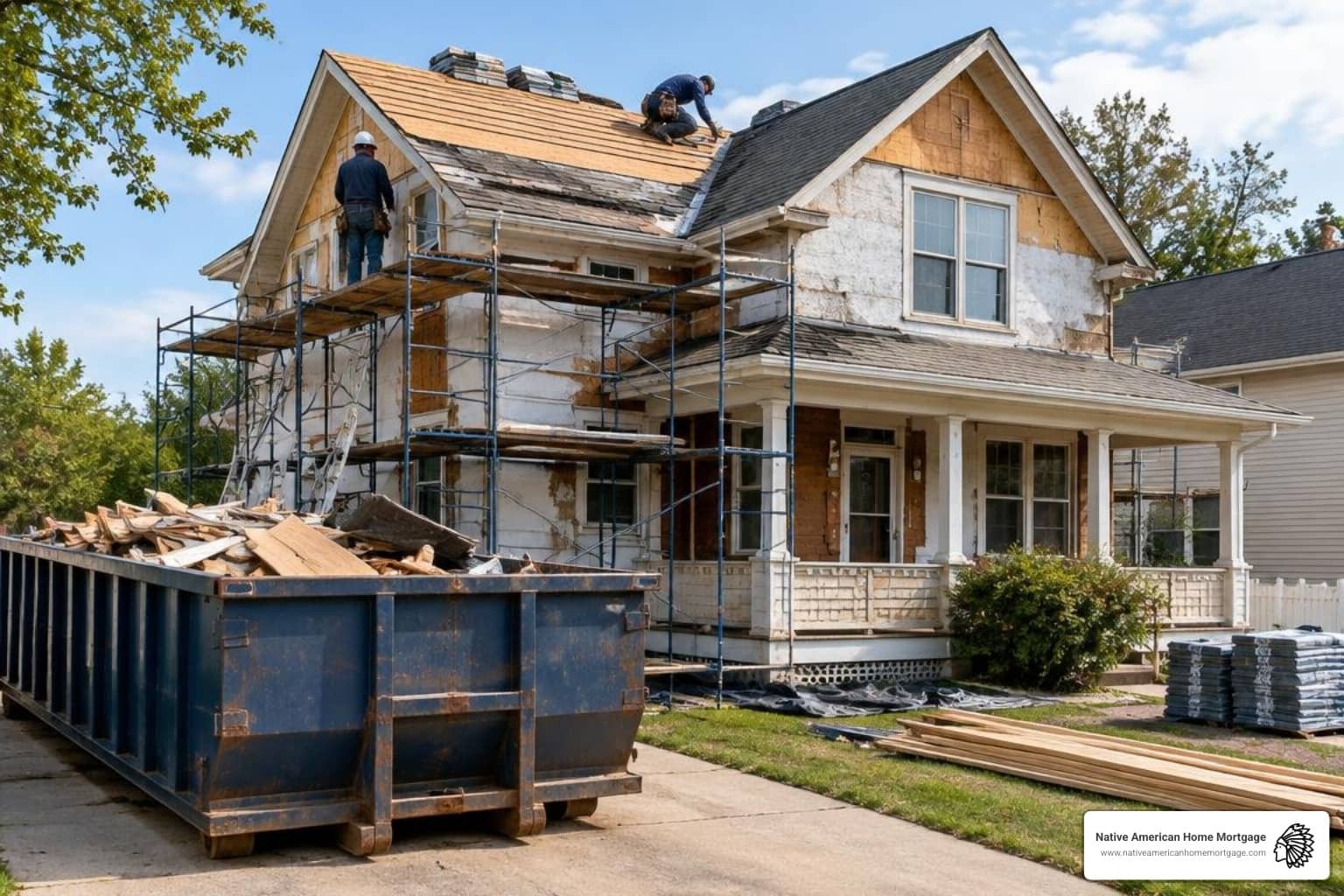
How a Construction Loan Helps You Build a Home
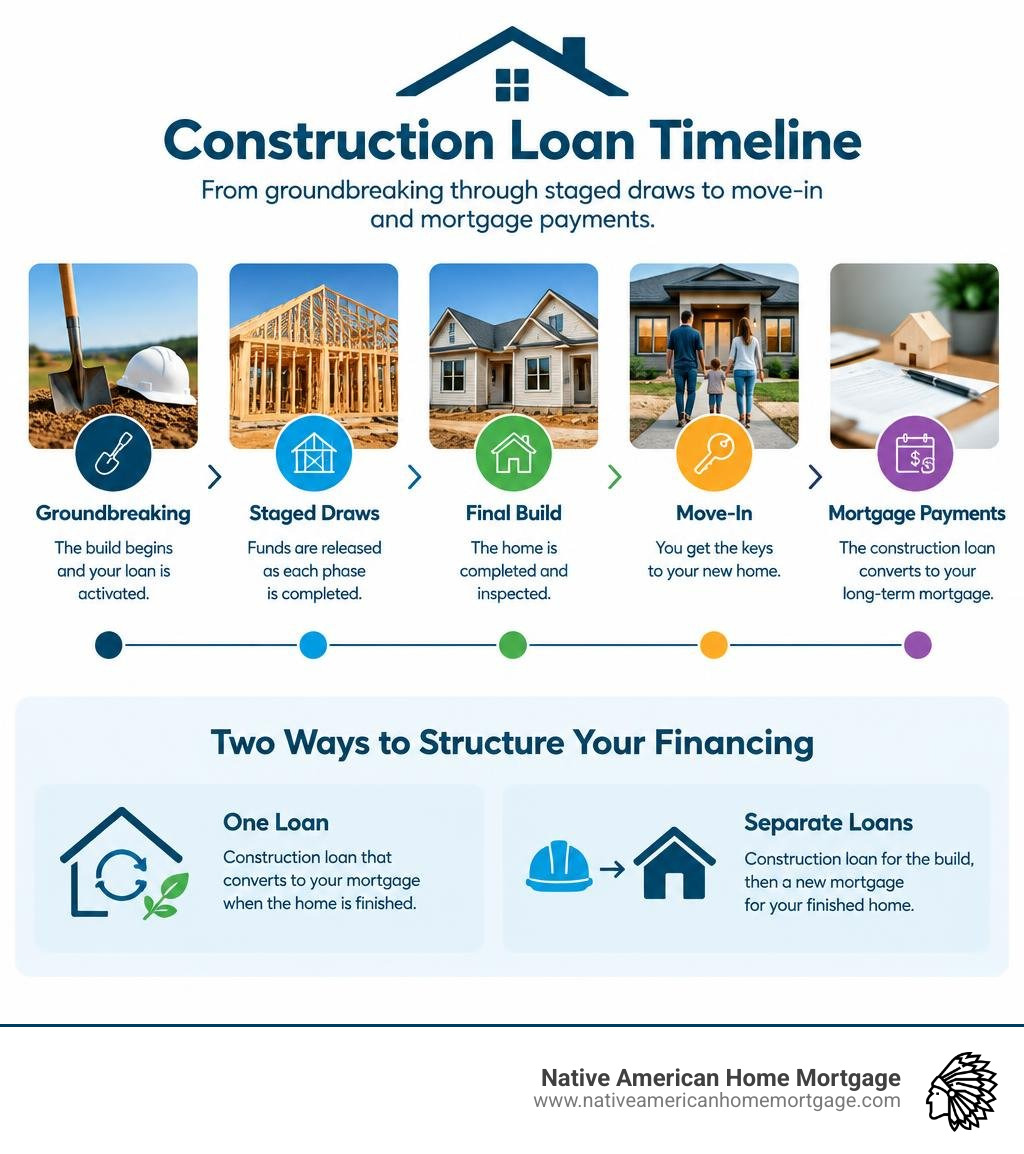
A construction loan pays for a home as it is built. Instead of giving you the full amount at once, the lender releases money in stages as work is completed. During the build, you typically pay interest only on the funds released.
To compare your options, start with one question: Do you want one loan that becomes your mortgage when the home is finished, or a separate construction loan that you will pay off with a new mortgage? Then ask each lender how it reviews your builder, land, budget, and draw schedule. Those details matter as much as the rate.
I’m Dale Gremillion, a Senior Loan Officer with more than 25 years in residential mortgage lending. I bring that experience to helping borrowers, including those in Native American communities, understand construction loan options before they commit to a build.
Understanding Construction Loan Types and Financing Structures
Financing a new build is fundamentally different from buying an existing home. When you purchase an existing property, the lender secures a long-term mortgage against a fully standing structure. With new construction, the collateral does not exist yet. As a result, lenders issue short-term notes designed specifically for the building phase, which later convert to or get replaced by permanent mortgages.
A primary distinction in construction lending centers on how the short-term phase transitions into long-term financing during the conversion phase. The table below outlines how the two primary structural formats compare:
| Feature | Single-Close (One-Time Close) | Two-Close (Stand-Alone Construction) |
|---|---|---|
| Number of Closings | One closing before construction starts | Two separate closings (one for build, one for permanent mortgage) |
| Closing Costs | Single set of closing fees and settlement charges | Two separate sets of closing costs and underwriting fees |
| Interest Rate Risk | Permanent rate locked upfront before breaking ground | Permanent rate must be secured near project completion |
| Underwriting Steps | One comprehensive underwriting evaluation | Two separate underwriting approvals (initial build and end loan) |
| Flexibility | Less flexibility to change loan terms mid-build | High flexibility to shop for new permanent loan products later |
| Ideal Borrower | Borrowers seeking rate certainty and streamlined settlement | Borrowers expecting income increases or falling market interest rates |
Single-Close vs. Two-Close Financing
A single-close setup combines your interim construction funds and your long-term permanent financing into a single promissory note. You lock in your permanent interest rate prior to groundbreaking, pay closing costs once, and avoid the risk of having to re-qualify financially when the home is finished. Many borrowers evaluate single-close construction to permanent loan options to eliminate the stress of shifting market conditions while their home is being framed. Some lenders also include a rate float-down feature, which allows you to take advantage of lower interest rates if market pricing drops during construction.
In contrast, a two-close structure separates the project into a short-term construction-only note followed by a standard refinance or “end loan” once the certificate of occupancy is issued. While this requires paying duplicate settlement fees, it offers maximum flexibility to change lenders or loan structures if your financial profile improves during the build. Understanding how these products function within current construction permanent loan structures in 2026 allows you to select the structure that best aligns with your timeline and risk tolerance.
Stand-Alone Construction and Renovation Programs
Stand-alone construction loans serve as temporary bridge financing, usually lasting 6 to 18 months. These programs require a clear exit strategy—typically paying off the balance via a conventional, FHA, VA, or specialized government-backed permanent loan.
For eligible Native American, Alaska Native, and Native Hawaiian borrowers, specialized programs provide unique advantages. The Section 184 Indian Housing Loan Guarantee Program offers construction-to-permanent financing with competitive terms, low down payments, and flexible underwriting on both fee simple land and tribal trust land. These targeted initiatives ensure indigenous families can finance custom builds without the restrictive down payment barriers common in standard portfolio products.
Core Qualification Criteria and Project Review
Lenders evaluate construction loan applications with greater scrutiny than standard mortgages because the property value is projected rather than established. Underwriters evaluate both the borrower’s personal financial strength and the feasibility of the proposed build.
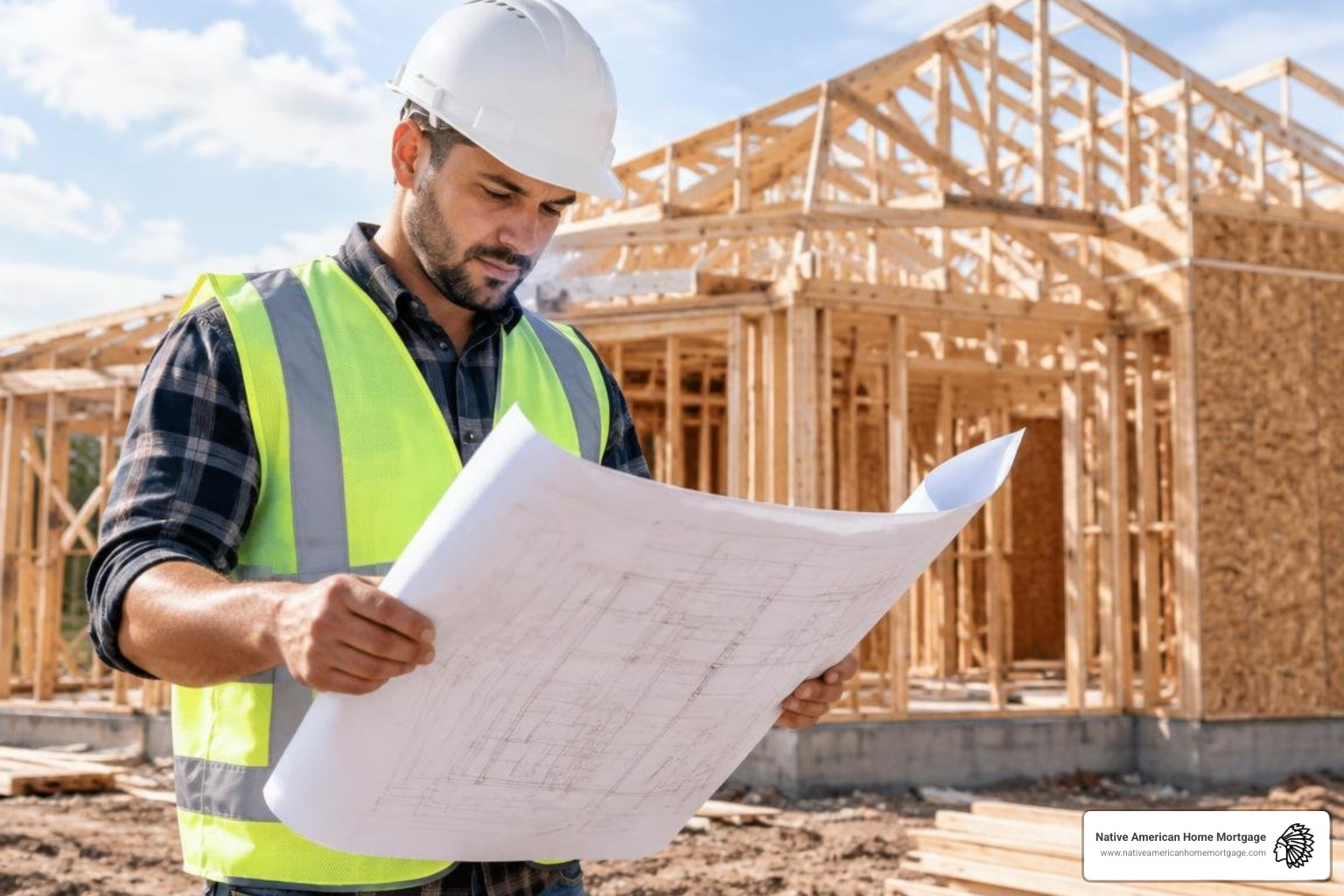
Underwriting revolves around several core metrics:
- Credit Score: Most lenders look for a credit benchmark of 680 to 720+ for conventional construction financing, though government-guaranteed initiatives may allow more flexible scores.
- Debt-to-Income (DTI) Ratio: Total monthly debt obligations (including the projected permanent mortgage payment, property taxes, and insurance) should generally remain under 43% to 45% of gross monthly income.
- Loan-to-Cost (LTC): This ratio compares the requested loan amount against the total actual cost to build (land purchase or value plus construction costs).
- Completed-Value Loan-to-Value (LTV): An appraiser performs an “as-completed” valuation based on architectural blueprints, specifications, and comparable local sales to confirm that the finished property will support the loan balance.
Construction Loan Requirements and Borrower Qualifications
Conventional construction financing typically requires a down payment of 20% to 25% of the total project cost. However, specialized credit union programs or government-backed products can reduce this down payment requirement significantly—sometimes as low as 3.5% to 5%.
Lenders also require verification of liquid cash reserves (often 3 to 6 months of principal, interest, taxes, and insurance payments) to ensure you can handle unexpected personal emergencies during construction. For self-employed borrowers, underwriters analyze two years of full personal and business tax returns, profit-and-loss statements, and balance sheets following Section II Production Chapter 6 Participant Credit and Financial Review standards to verify reliable cash flow.
Builder Vetting, Land Equity, and Permits
Your general contractor must undergo a formal vetting process before loan approval. Lenders review the builder’s:
- Active state contractor licensing and credentials.
- Comprehensive General Liability and Builder’s Risk insurance coverage.
- Industry references and past portfolio of comparable completed homes.
- Financial solvency and active credit accounts with material suppliers.
If you already own the building lot, you can often use your accumulated land equity toward your down payment requirements. If you purchased the land recently, lenders may credit the original purchase price; if you have held the parcel for more than 12 months, many lenders will credit the current appraised fair market value. For those building in specific microclimates or desert environments, addressing local zoning, environmental clearance, and utility access is crucial, as highlighted in our guide to regional custom home financing considerations.
Project Budgeting and the Draw Disbursement Process
A construction loan budget must account for every nail, permit fee, and excavation expense. Once the loan closes, funds are not released directly to the borrower in a lump sum. Instead, they are disbursed across predefined milestones through a structured draw schedule.

Hard Costs, Soft Costs, and Contingency Reserves
Every project budget is divided into distinct categories:
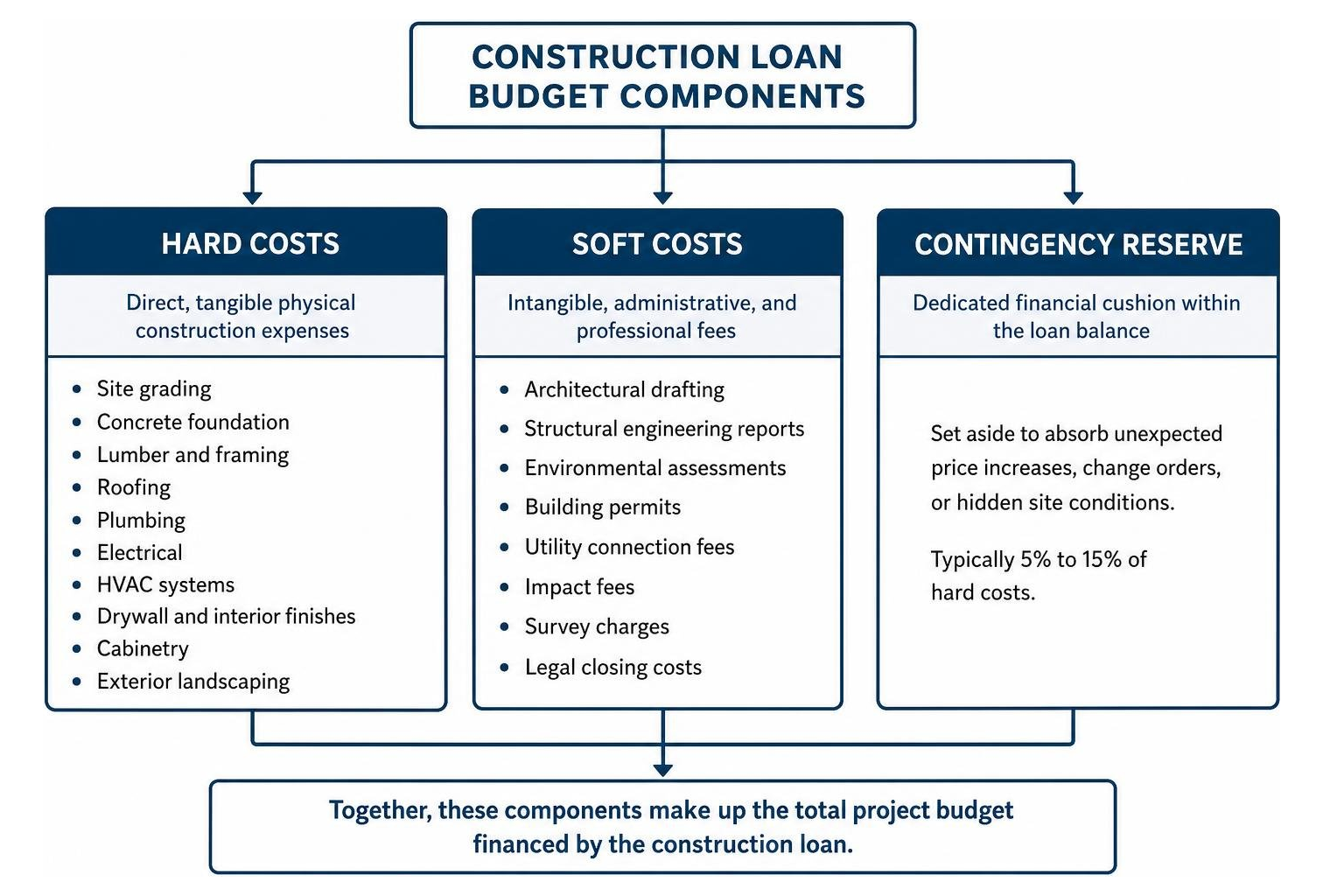
- Hard Costs: Direct, tangible physical construction expenses, including site grading, concrete foundation pouring, lumber, framing, roofing, plumbing, electrical, HVAC systems, drywall, cabinetry, and exterior landscaping.
- Soft Costs: Intangible, administrative, and professional fees necessary to complete the build. These include architectural drafting, structural engineering reports, environmental impact assessments, building permits, utility connection fees, impact fees, survey charges, and legal closing costs.
- Contingency Reserve: A dedicated financial cushion—typically 5% to 15% of hard costs—set aside within the loan balance to absorb unexpected price increases, change orders, or hidden site conditions. Exploring practical home financing options early helps you decide whether to finance this reserve or hold it as personal liquid savings.
Managing Your Construction Loan Draw Schedule and Budget
As construction advances, your builder requests progress draws to pay for completed phases. Before any money is wired, the lender sends an independent inspector to verify that the work meets quality standards and aligns with the budget line items. Additionally, title updates are run to confirm no mechanic’s liens have been filed, and the builder must submit signed lien waivers from subcontractors and suppliers.
A standard residential draw schedule generally follows these milestones:
- Draw 1 (Site Preparation & Foundation): Clearing, excavation, rough plumbing, concrete slab pouring, or basement foundation curing.
- Draw 2 (Framing & Shell): Wall framing, roof trusses, exterior sheathing, window and exterior door installation.
- Draw 3 (Systems Rough-In): Plumbing lines, electrical wiring, HVAC ductwork, insulation, and initial municipal code inspections.
- Draw 4 (Interior Finishes): Drywall installation, interior doors, trim carpentry, cabinetry, and tile work.
- Draw 5 (Final Completion): Mechanical trim-out, painting, flooring, exterior flatwork, issuance of the Certificate of Occupancy, and final lien waivers.
Frequently Asked Questions About Construction Financing
How do interest payments work during the construction phase?
During the construction phase, you make interest-only payments on the funds that have actually been drawn—not the total approved loan limit. For example, if you have a $400,000 total loan commitment but only $100,000 has been disbursed for the foundation and framing, your monthly payment is calculated solely on that $100,000 balance. Some borrowers roll an “interest reserve” directly into the loan budget, allowing monthly interest payments to be paid from the loan itself during construction.
What happens if the project encounters cost overruns or delays?
If material prices rise or you request design changes, expenses are first covered using the allocated contingency reserve fund. If changes exceed that reserve, you must pay the difference out-of-pocket, as lenders rarely increase the base loan amount after closing. If construction timelines face weather delays or supply shortages, lenders can grant formal timeline extensions, though extension fees may apply.
Can I use the land I already own as a down payment?
Yes. If you own your building lot free and clear, the full appraised value of the land can serve as equity toward your required down payment. If you still owe money on a land loan, the construction loan will pay off that existing balance at closing, and your net equity (appraised land value minus the loan payoff) will be credited toward your down payment requirement.
Conclusion: Choosing the Right Financing for Your Build
Financing the construction of a custom home requires careful planning, transparent budgeting, and selecting a knowledgeable lending team. By evaluating whether a single-close or two-close structure matches your financial goals, assembling a realistic budget with adequate contingency reserves, and partnering with an experienced builder, you set the foundation for a smooth build.
At Native American Home Mortgage, we specialize in helping individuals and tribal community members navigate every stage of custom home financing. To take the next step in planning your build, explore The Ultimate Guide to Construction to Permanent Loans and connect with our team to turn your blueprints into reality.