A Clear Path to Homeownership With Tribal Lending Options
When exploring tribal mortgage options for the first time, eligible Native American and Alaska Native borrowers can access HUD Section 184 mortgages – a federal home loan guarantee program built for tribal communities. Unlike a high-cost personal or payday loan, Section 184 is designed for long-term homeownership, with fixed-rate terms of up to 30 years, low down-payment options, and no monthly mortgage insurance.
If conventional lenders have overlooked the details of tribal trust land, leasehold property, or off-reservation purchases, Section 184 may offer a better fit. Eligible borrowers can use the program to buy, build, rehabilitate, or refinance a home on approved tribal land or in eligible counties off reservation.
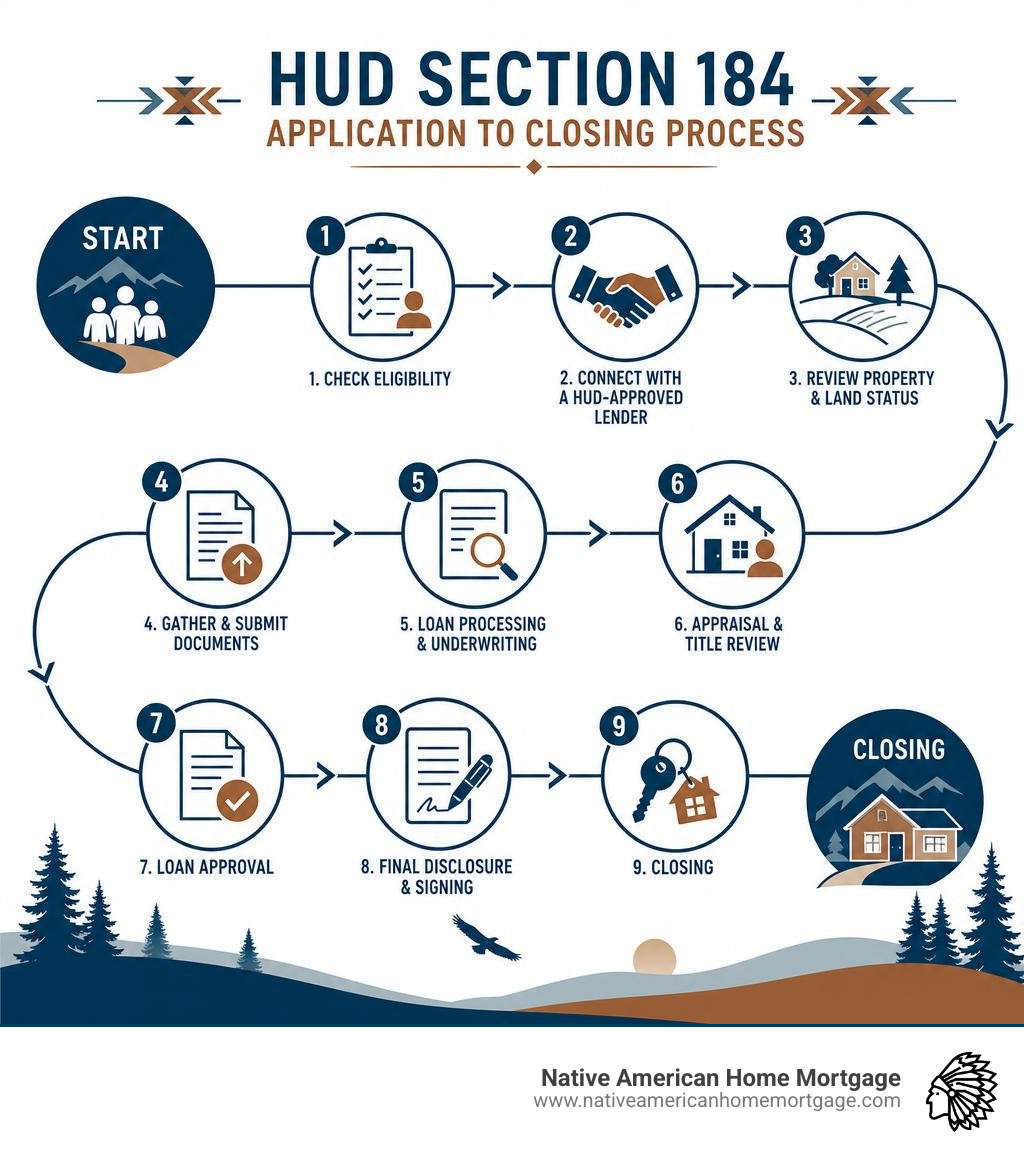
Start with these three steps:
- Confirm that you are eligible through tribal enrollment or another qualifying status.
- Choose a HUD-approved lender with Section 184 experience.
- Review the property’s land status and loan options before applying.
Section 184 is a HUD-backed mortgage guarantee, not the high-interest online consumer lending sometimes labeled “tribal lending.” That difference matters: one is structured to support affordable homeownership, while the other can involve short-term loans with extremely high annual percentage rates. For many buyers, making your 1st tribal lending decision means understanding which type of financing is actually designed for homeownership and which should be avoided entirely.
I am Dale Gremillion, a Senior Loan Officer and Producing Branch Manager with more than 25 years of residential mortgage experience, including HUD 184 and dedicated tribal home financing. I help borrowers understand the programs, property rules, and loan structures that can make a smooth closing possible.
Understanding the HUD Section 184 Program and Tribal Lending
Navigating residential mortgages on Native land has historically been a challenge for tribal families. Because tribal trust land cannot be mortgaged or encumbered through typical commercial foreclosure proceedings, traditional banks long avoided making loans in Indian Country.
To bridge this economic divide, Congress created the Section 184 Indian Home Loan Guarantee Program in 1992. Administered by the U.S. Department of Housing and Urban Development (HUD), the program solves the collateral dilemma by guaranteeing 100% of the loan to the lender in the rare event of default. This vital federal backstop minimizes risk and encourages private capital investment in tribal areas.
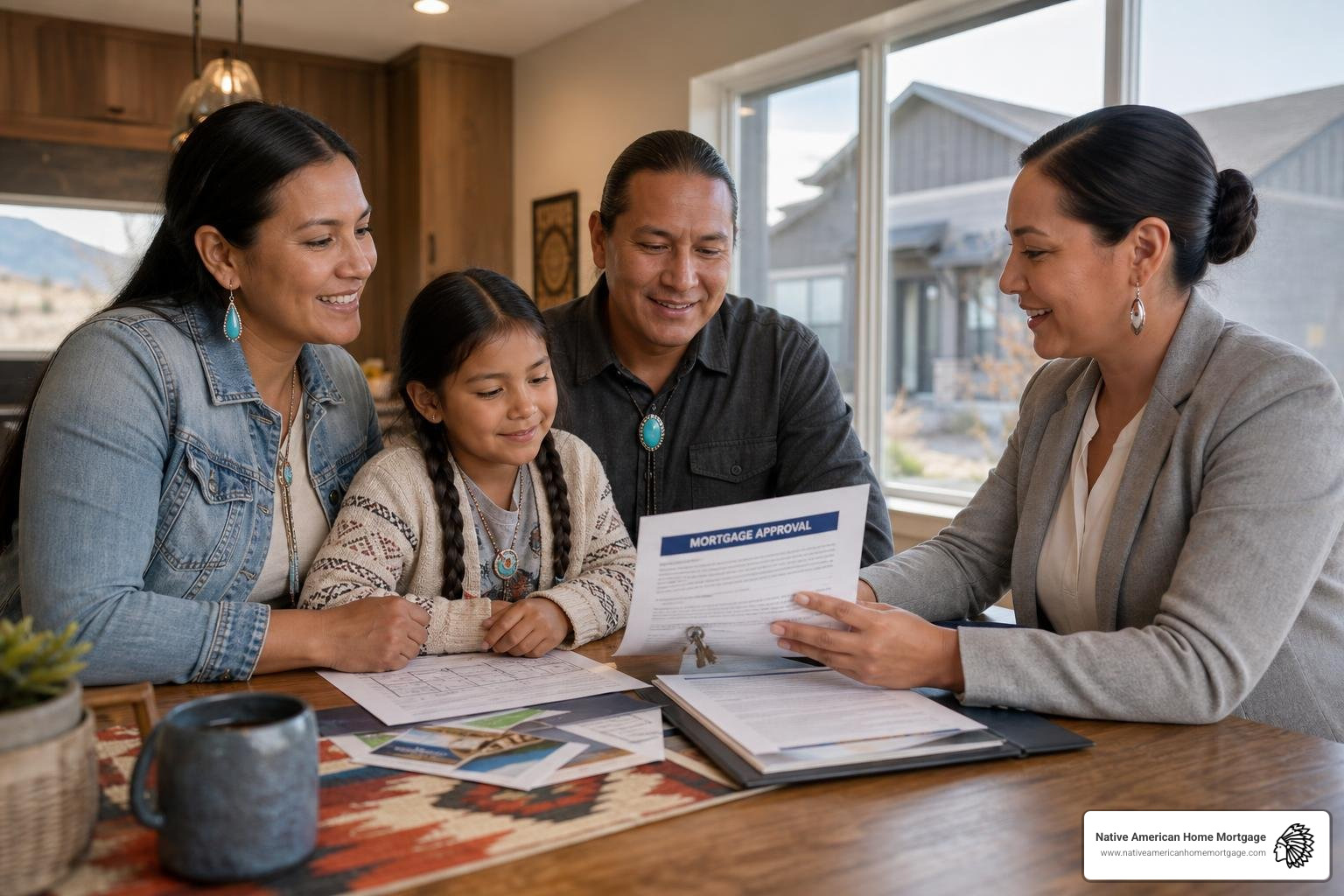
When borrowers ask what is a HUD 184 loan, we explain that it is an affordable, government-backed financing vehicle created exclusively for American Indian and Alaska Native families, Tribally Designated Housing Entities (TDHEs), and Indian Housing Authorities (IHAs).
Key features of this program include:
- Low Down Payments: Borrowers only need as little as 2.25% down for loans over $50,000, and just 1.25% for loans under $50,000.
- Zero Monthly Mortgage Insurance (PMI): Unlike conventional loans that penalize down payments of less than 20%, or FHA loans that charge ongoing annual premiums, Section 184 requires only a one-time 1.5% guarantee fee paid at closing (which can be financed into the loan).
- Standard 30-Year Fixed Rates: The program utilizes prevailing competitive market interest rates, strictly prohibiting volatile adjustable-rate mortgages (ARMs) or balloon payments.
- Flexible Property Uses: Financing applies to single-family homes (1 to 4 units) for purchase, construction, substantial rehabilitation, or refinancing.
- Broad Geographical Scope: Financing is not restricted to reservation borders; it covers both tribal trust land and standard fee simple land within participating counties across the nation.
How Approved Lenders Deliver Section 184 Mortgages
Not every retail mortgage bank is equipped to handle tribal home financing. Navigating Bureau of Indian Affairs (BIA) Title Status Reports (TSRs), land leases, and sovereign tribal approvals requires dedicated infrastructure.
Within this specialized lending space, HUD-approved direct lenders lead the Section 184 ecosystem. By retaining dedicated loan servicing and maintaining in-house underwriting teams trained in tribal law and BIA procedures, experienced mortgage lenders streamline what used to be a burdensome multi-month closing process.
Understanding the standard Section 184 loan qualifications and guidelines allows borrowers to take full advantage of underwriting flexibilities, such as reasonable debt-to-income limits and non-traditional credit consideration.
Expanding Broker Access with Marketplace Tech
Modern mortgage technology has accelerated access to tribal home loans. Through integrations with platforms like the Lender Price Marketplace, independent mortgage brokers and mini-correspondent lenders can price, compare, and submit Section 184 loan packages in real time alongside standard conventional, Non-QM, and FHA products.
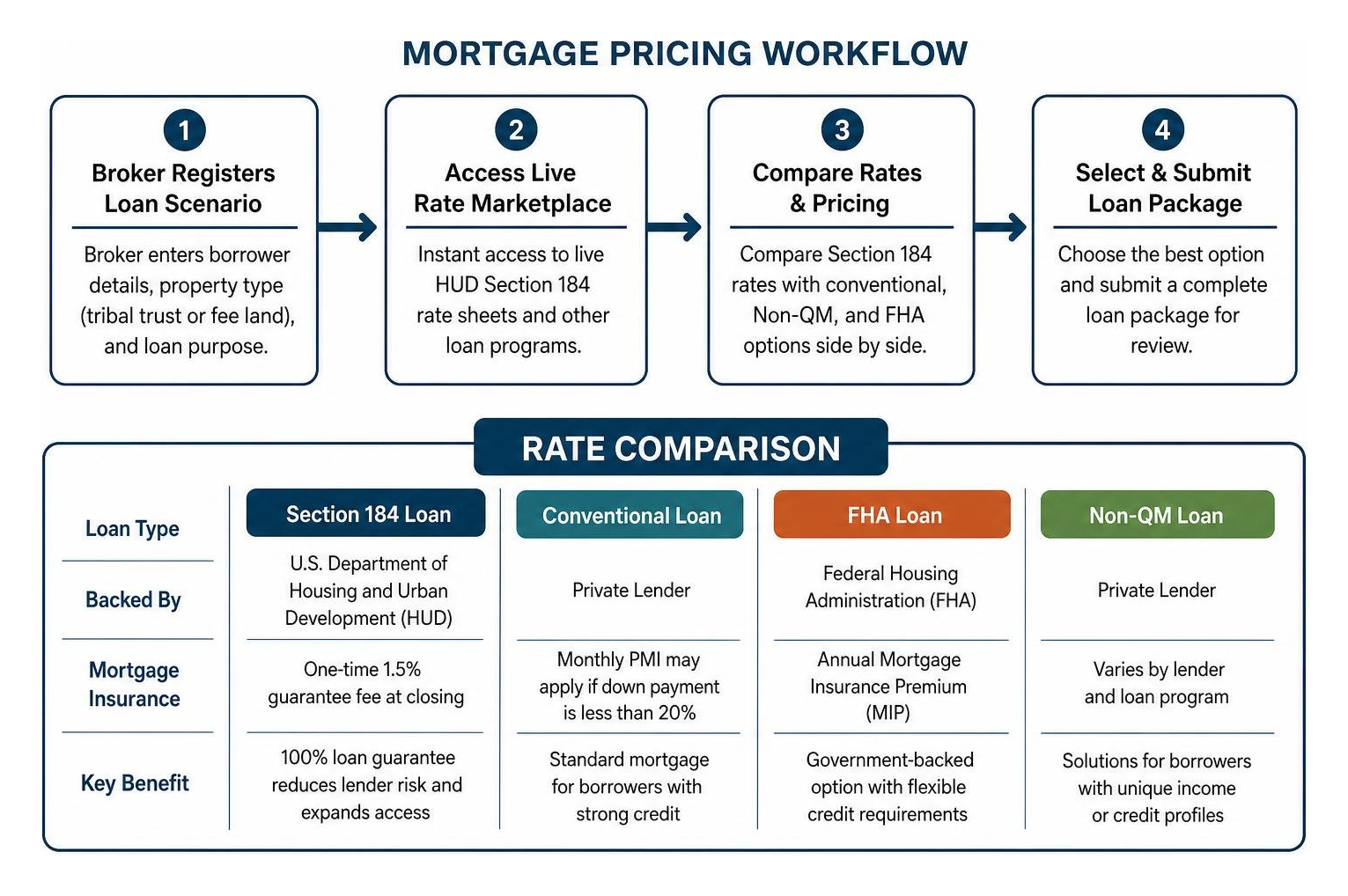
This digital connectivity removes geographic barriers. An independent mortgage broker in Texas or Oklahoma can instantly access live HUD 184 rate sheets, evaluate unique leasehold scenarios, and calculate pricing structures suited to an indigenous homebuyer’s credit profile. By giving brokers immediate access to automated underwriting rules and competitive secondary pricing, technology significantly boosts overall Native American mortgage approval odds.
Section 184 Mortgages vs. High-Interest Tribal Consumer Lending
When people search online for financing options, the phrase “tribal lending” frequently generates confusing and contradictory results. It is critical to draw a clean, unequivocal line between legitimate HUD-backed tribal mortgage programs and the predatory world of online tribal payday lending.
Legitimate tribal home financing operates under strict federal regulations with interest rates tied to standard market indices. Conversely, several online cash-advance entities have exploited tribal corporate charters to market short-term installment loans carrying triple-digit annual percentage rates (APRs).
As detailed in investigative reporting on how a Wisconsin Tribe Built a Lending Empire on 600% APR Loans — ProPublica, certain short-term lenders have charged vulnerable consumers interest rates ranging from 400% to over 800% APR under the banner of tribal sovereignty. Understanding these differences is vital when demystifying Section 184 home financing solutions.
| Feature | HUD Section 184 Tribal Home Loan | Online Tribal Payday / Consumer Loan |
|---|---|---|
| Loan Purpose | Long-term home purchase, build, or refinance | Short-term emergency cash advance |
| Interest Rate (APR) | Competitive fixed market rates (e.g., 5%–7%) | Extreme triple-digit rates (200%–800%+) |
| Federal Oversight | U.S. Department of HUD and BIA | Often claims exemption from state & federal caps |
| Consumer Protection | Fully compliant with RESPA, TILA, and CFPB rules | Relies on tribal forum selection and mandatory arbitration |
| Asset Backing | Real estate equity (builds generational wealth) | Unsecured debt (drains consumer cash flow) |
| Monthly Insurance | 0% monthly mortgage insurance (PMI) | N/A (high fees charged directly in payments) |
The ‘Rent-a-Tribe’ Scheme and Legal Repercussions
High-interest consumer lenders often use an operational structure commonly called a “rent-a-tribe” scheme. In these arrangements, outside non-tribal financial firms, hedge funds, or fintech companies handle the capital, marketing, algorithmic underwriting, and loan servicing.
To bypass state usury limits—which cap personal loan rates in states like Virginia (12%), Georgia (8%), and Connecticut (12%)—these outside operators partner with a federally recognized tribe. By paying the tribal entity a tiny cut of gross revenues (frequently just 1% to 2%), the outside operators market loans nationwide under a tribal shell company, asserting that the tribe’s sovereign immunity shields them from all state consumer protection laws.

Federal courts and regulatory agencies have pushed back against these arrangements:
- RICO Class Actions: Borrowers and consumer protection attorneys have utilized the Racketeer Influenced and Corrupt Organizations (RICO) Act to target non-tribal executives, securing treble damages for unlawful debt collection.
- State Enforcement Orders: An investigative report on How States Have Cracked Down on High-Interest Tribal Lenders — ProPublica demonstrates how states such as New York, Pennsylvania, Minnesota, and West Virginia have issued cease-and-desist orders, barring predatory online lenders from collecting within their borders.
- Arm-of-the-Tribe Scrutiny: State and federal courts apply strict multi-factor tests—analyzing the entity’s creation, operational control, and actual financial flow—to decide if a business is truly an “arm of the tribe.” When evidence reveals that non-tribal third parties pocket 98% of the proceeds, courts routinely strip away sovereign immunity defenses.
Consumer Harm and the Fight Over Sovereign Immunity
The economic fallout from predatory online consumer lending is severe. Thousands of consumer complaints filed with the Federal Trade Commission (FTC) describe how small loans of $500 balloon into unpayable liabilities exceeding $3,000 within months. Filings show these high-interest loans appearing frequently in personal bankruptcy proceedings across the country.
Legal pushback has resulted in significant court victories:
- A landmark federal class-action settlement involving online lending businesses connected to the Lac du Flambeau Band delivered $1.4 billion in total debt relief and tens of millions in cash restitution for nearly one million affected consumers.
- Since 2019, federal lawsuits across multiple jurisdictions have secured more than $2.9 billion in canceled consumer loans and over $360 million in direct borrower restitution.
- Courts have consistently established that while tribal governments maintain sovereign immunity, state officials can obtain prospective injunctive relief against tribal officers and non-tribal corporate partners to halt illegal off-reservation lending operations.
True tribal economic development and homeownership are built on transparent, federally supported programs—not predatory short-term lending models.
How to Qualify and Apply for Tribal Mortgage Programs
Securing an affordable home purchase loan through the HUD Section 184 program is a straightforward, supportive process when working with a qualified, experienced lender.
The process begins with proving individual borrower eligibility. Applicants must be an enrolled member of a federally recognized American Indian or Alaska Native tribe. Borrowers demonstrate this through a tribal enrollment card or a Certificate of Degree of Indian Blood (CDIB) issued by the BIA.
From there, the application mirrors standard mortgage underwriting, but with greater flexibility:
- Credit Flexibility: While a good credit score is helpful, Section 184 permits alternative credit histories (such as on-time utility, cell phone, or rent payments) for buyers who do not have a standard credit profile.
- Reasonable Debt-to-Income (DTI) Ratios: Underwriters generally look for a 41% DTI ratio, but higher ratios are readily considered when supported by compensating factors, such as solid cash reserves or long-term job stability.
- Property Approvals: If purchasing off-reservation fee simple real estate, the process operates much like a standard home sale. For homes located on tribal trust land, the lender’s team coordinates directly with the local tribal housing authority and the BIA Land Titles and Records Office (LTRO) to secure the necessary residential leasehold approvals.
To prepare your finances, review the step-by-step Native American home purchase process to avoid common delays during underwriting. Additionally, investigate state and tribal assistance by learning how to find Native American housing programs and financial support, which can provide down-payment assistance grants that pair directly with your Section 184 mortgage.
Frequently Asked Questions about Tribal Lending and HUD 184
Who qualifies for a HUD Section 184 home loan?
Eligible borrowers include enrolled members of any federally recognized American Indian tribe or Alaska Native village. Tribally Designated Housing Entities (TDHEs), Indian Housing Authorities (IHAs), and federally recognized tribes themselves also qualify as direct borrowers to construct or purchase community housing stock.
Borrowers can explore dedicated home loans for Native American families to confirm specific tribal affiliations and documentation requirements.
What makes HUD-approved tribal lending distinct from high-interest tribal lenders?
HUD-approved Section 184 lending is an official federal mortgage guarantee program. It offers fixed-rate, low-interest, long-term real estate financing overseen directly by HUD’s Office of Loan Guarantee. It strictly limits closing costs and prohibits predatory features.
High-interest online tribal lenders, by contrast, are short-term consumer credit companies operating outside federal mortgage guidelines, often charging APRs of 400% to 800% under claims of sovereign immunity.
Can HUD Section 184 loans be used to buy off-reservation property?
Yes. A common misconception is that Section 184 mortgages are restricted to reservation land. In reality, the program can be used to buy, build, or refinance fee simple properties located in any eligible county across participating states. This flexibility allows Native American and Alaska Native families to secure affordable home financing whether they choose to live on tribal trust land or in standard suburban and urban neighborhoods.
Conclusion
Achieving homeownership is one of the most powerful steps toward building long-term family stability and generational wealth. While the online marketplace is full of complex financial offers, understanding the difference between predatory consumer loans and legitimate federal home mortgage programs protects your financial future.
The HUD Section 184 program remains one of the most effective, affordable homeownership opportunities available to Native American and Alaska Native families across the country. With ultra-low down payments, competitive fixed interest rates, and zero monthly mortgage insurance, it bypasses the traditional barriers that have kept indigenous buyers out of the housing market for decades.
If you are ready to explore your mortgage options, pre-qualify for a new purchase, or refinance an existing property on or off tribal lands, visit the Native American Home Mortgage platform to connect with experienced Section 184 lending specialists today.