How Native American Home Loan Rates Compare
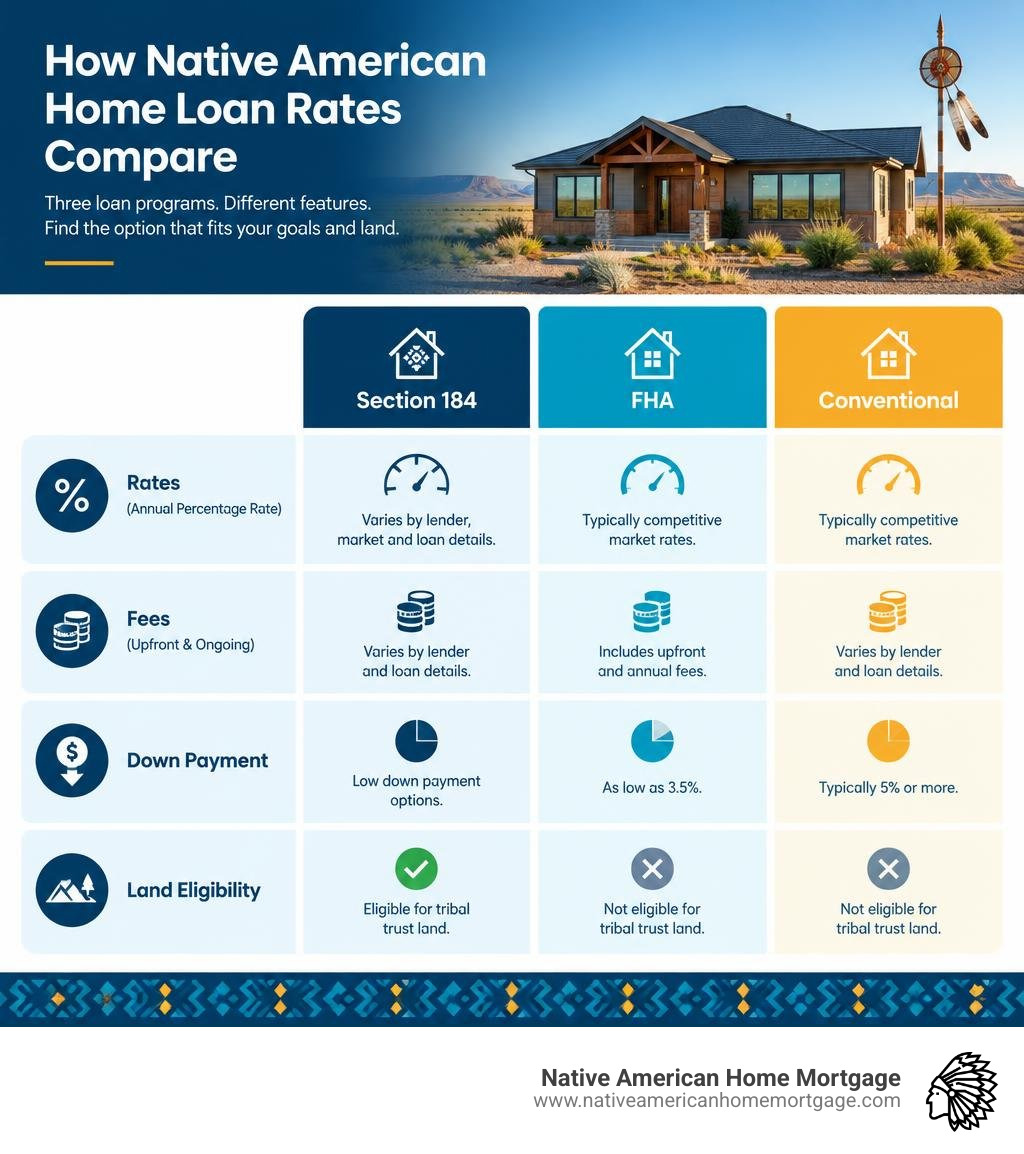
Section 184 loans do not have one set interest rate. Approved lenders price them based on the market and the loan details, so a Section 184 rate is not always lower than a conventional or FHA rate. For a fair comparison, ask lenders for same-day quotes and compare the annual percentage rate (APR), upfront fees, and monthly payment, not just the interest rate.
Section 184 can still be a strong option if a conventional lender cannot finance your home on tribal trust land. It also offers a low down payment and no annual guarantee fee on loans closed since July 1, 2023.
I’m Dale Gremillion, a senior loan officer with more than 25 years of mortgage lending experience, including Section 184, FHA, and conventional loans. I help borrowers compare Native American home loan rates alongside the land and loan terms that shape their options.
Native American home loan rates word list:
Comparing Current Native American Home Loan Rates with Market Benchmarks
When navigating the mortgage landscape in 2026, understanding how specialized tribal programs stack up against standard market products is essential. Today, an estimated 3.43 million people in the United States identify solely as American Indian or Alaska Native, while an additional 5.68 million identify as multiracial Indigenous citizens. Across 575 federally recognized tribes and roughly 326 reservations, securing fair financing remains a cornerstone of tribal sovereignty and personal wealth building.
Section 184 financing uses market-based pricing. This means interest rates track broader macroeconomic conditions, such as 10-year Treasury yields and inflation trends, rather than being fixed by a statutory government table. However, because the loan carries a 100% guarantee backed by the Office of Loan Guarantee at the U.S. Department of Housing and Urban Development (HUD), approved lenders can offer terms competitive with conventional and FHA mortgages.
Historically, Indigenous homebuyers have encountered substantial lending disparities. According to Federal Reserve Bank of Minneapolis research on tribal mortgage disparities, Native American borrowers on reservations have faced an average interest rate spread 143 basis points higher than White borrowers, largely driven by structural barriers and an over-reliance on personal property loans. Programs like HUD Section 184 were built specifically to eliminate these artificial rate spreads.
| Feature / Mortgage Type | HUD Section 184 Guaranteed Loan | Standard FHA Loan | Conventional Mortgage (Conforming) |
|---|---|---|---|
| Minimum Down Payment | 1.25% (<$50k) or 2.25% (≥$50k) | 3.50% | 3.00% to 5.00% |
| Upfront Guarantee / Funding Fee | 1.00% (financed into loan) | 1.75% (financed into loan) | None (or built into private mortgage insurance) |
| Annual Mortgage Insurance Premium | 0.00% (for loans closed post-July 1, 2023) | 0.55% | Private MI (0.20% – 1.50% based on credit score) |
| Tribal Trust Land Permitted? | Yes (via BIA leasehold process) | Rarely approved by standard lenders | Extremely restricted / rare |
| Credit Evaluation Standard | Flexible manual underwriting allowed | Strict automated underwriting rules | Strict automated credit tier pricing |
For borrowers exploring standard low-down-payment options, reviewing an FHA and Section 184 comparison clarifies how the removal of monthly mortgage insurance premiums makes Section 184 financing a compelling alternative.
Section 184 Rate and Fee Benchmarks
Mortgage costs consist of upfront fees, interest rates, and ongoing insurance premiums. A major benefit of Section 184 financing is the complete elimination of the annual loan guarantee fee for all loans originated on or after July 1, 2023. Unlike standard FHA loans, which mandate a 0.55% annual premium across the life of the loan, Section 184 borrowers pay zero monthly mortgage insurance.
The upfront guarantee fee remains fixed at 1.00% of the loan amount, which can be fully rolled into the loan balance at closing. By comparison, FHA loans assess a 1.75% upfront fee. According to insights from the Freddie Mac report on Native American homeownership, avoiding continuous monthly private mortgage insurance creates long-term wealth benefits, allowing families to build equity faster without extra recurring penalties.
Factors That Influence Section 184 Mortgage Costs
While HUD provides a federal guarantee, lenders still establish individual pricing models based on operational risk, property type, and transaction structure:
- Manufactured vs. Stick-Built Housing: Manufactured homes attached to a permanent foundation are fully eligible under Section 184. However, personal property “chattel” loans—which treat manufactured units like motor vehicles—charge significantly higher rates. Converting to real-property Section 184 financing prevents these high costs.
- Secondary Market Liquidity: Lenders package Section 184 loans into Ginnie Mae mortgage-backed securities (MBS). As institutional investor demand for tribal securities fluctuates, lenders adjust their daily rate sheets.
- Property Access and Permitting: Remote locations may require specialized appraisals and extended closing timelines, which can influence lock-in periods and associated administrative fees.
Eligibility Criteria and Underwriting for Section 184 Financing
Securing a Section 184 loan requires satisfying specific programmatic requirements set by HUD alongside standard financial verification rules. To better understand what is a HUD 184 loan, borrowers should review tribal eligibility standards, geographic footprints, and underwriting practices.

Underwriting under Section 184 accommodates unique household financial circumstances. Unlike conventional lending platforms that rely heavily on rigid automated underwriting algorithms, HUD 184 allows approved direct-endorsement lenders to utilize manual underwriting. This means an underwriter examines the whole picture: utility payment histories, rent verifications, and explanations for temporary financial disruptions.
Tribal Verification and Sovereign Nation Jurisdiction
To qualify as an individual borrower, you must provide documentation proving current enrollment as an American Indian or Alaska Native in one of the 575 federally recognized tribes.
Key jurisdictional elements include:
- Tribal Identification: A formal Certificate of Degree of Indian Blood (CDIB) or a tribal enrollment card issued by your sovereign nation.
- Geographic Availability: The home must be located within an approved Section 184 service area. HUD designates entire states—such as Oklahoma, Arizona, New Mexico, and Washington—as eligible operating zones, alongside designated tribal trust regions across participating states.
- Eligible Entities: In addition to individual tribal citizens, federally recognized tribes and tribally designated housing entities (TDHEs) can use Section 184 to finance affordable community housing developments.
Borrowers can find comprehensive operational handbooks and designated regional contacts directly through the Section 184 Indian Housing Loan Guarantee Program directory.
Down Payment, Loan Limits, and Fee Structures
Section 184 features down payment requirements tailored to various price tiers:
- Loans Under $50,000: Requires a down payment of just 1.25%.
- Loans of $50,000 and Above: Requires a down payment of 2.25%.
These down payments are notably lower than FHA’s 3.50% requirement or conventional financing’s standard 5.00% benchmark. Furthermore, down payment funds may stem from personal savings, gift funds from family members, or tribal housing assistance grants.
Maximum lending ceilings correspond to county-level limits set by HUD, scaling upward in high-cost housing regions. For a detailed matrix detailing how these limits coordinate with other federal options, consult the NAIHC Native American Mortgage Loan Comparisons documentation.
Financing on Tribal Trust Land vs. Fee Simple Land
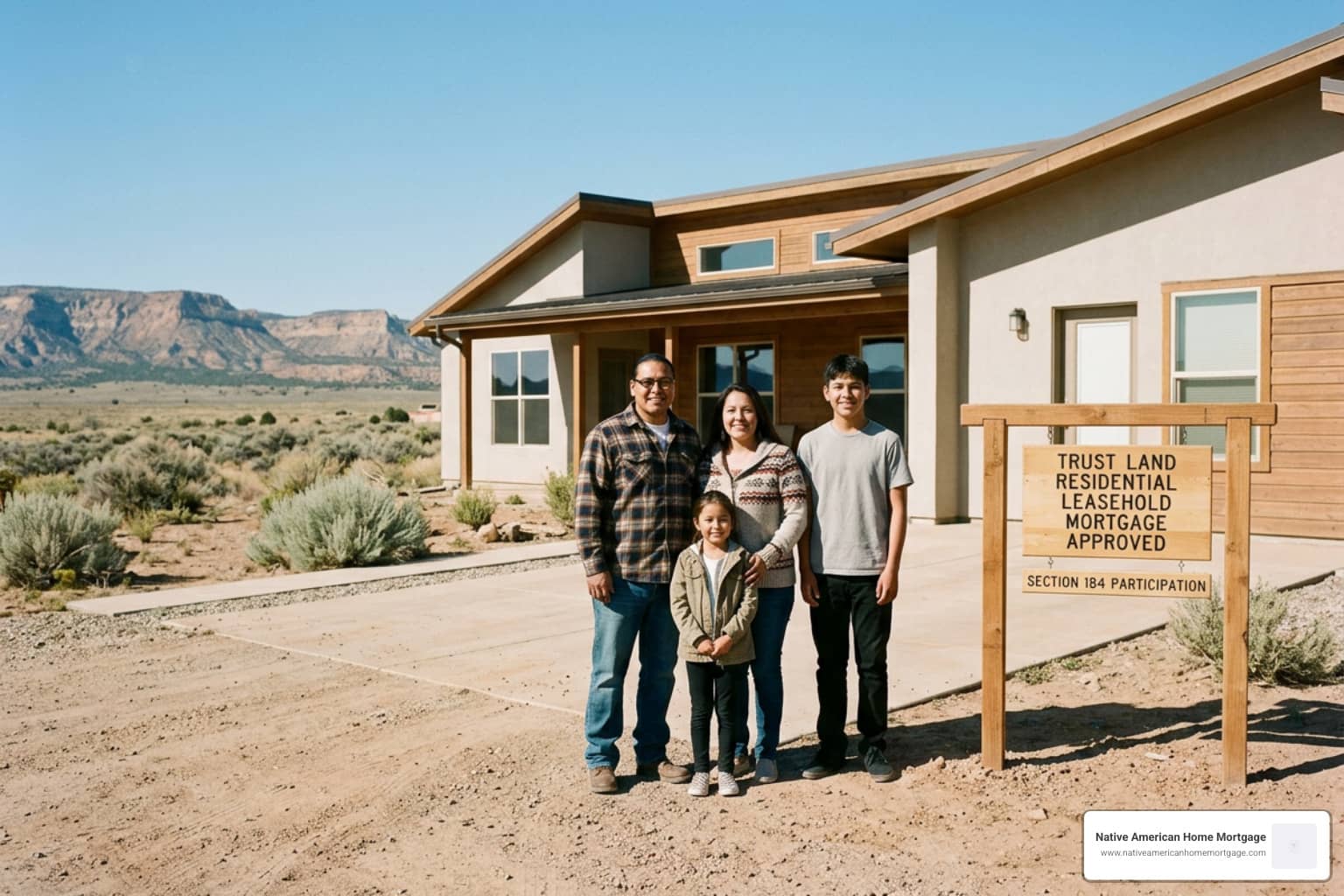
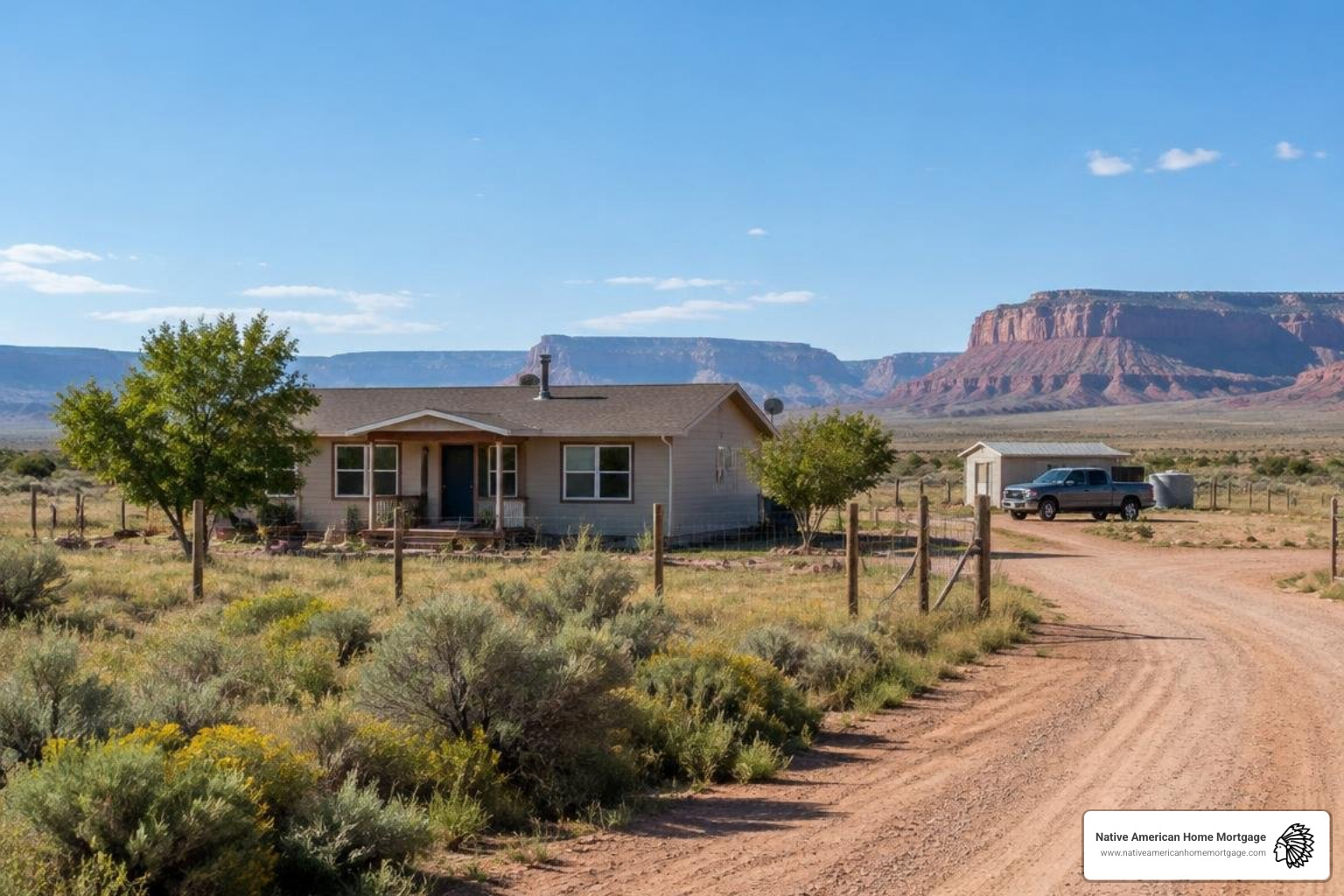
One of the strongest advantages of the Section 184 program is its legal authority to finance homes situated on tribal trust land, allotted land, and fee simple land.
Understanding the legal nature of your property parcel is essential when setting loan expectations:
- Fee Simple Land: Traditional real estate held privately by individuals outside sovereign protection. The title process proceeds through standard county recording offices.
- Tribal Trust Land: Land held in trust by the federal government for the collective benefit of a sovereign tribe. Because the land cannot be alienated or encumbered without federal and tribal consent, standard commercial lenders generally avoid it.
- Individual Allotted Trust Land: Real property held in trust for specific tribal citizens, requiring specialized bureaucratic approvals.
When mapping out your financing journey across these ownership models, reading a complete guide to Native American home loans provides step-by-step clarity.
How Credit Scores and Land Titles Influence Native American Home Loan Rates
When borrowing on trust or restricted land, conventional title insurance is replaced by a specialized federal process. The borrower secures a long-term residential lease (typically 50 years) from the tribal government, which must then be reviewed by the Bureau of Indian Affairs (BIA).
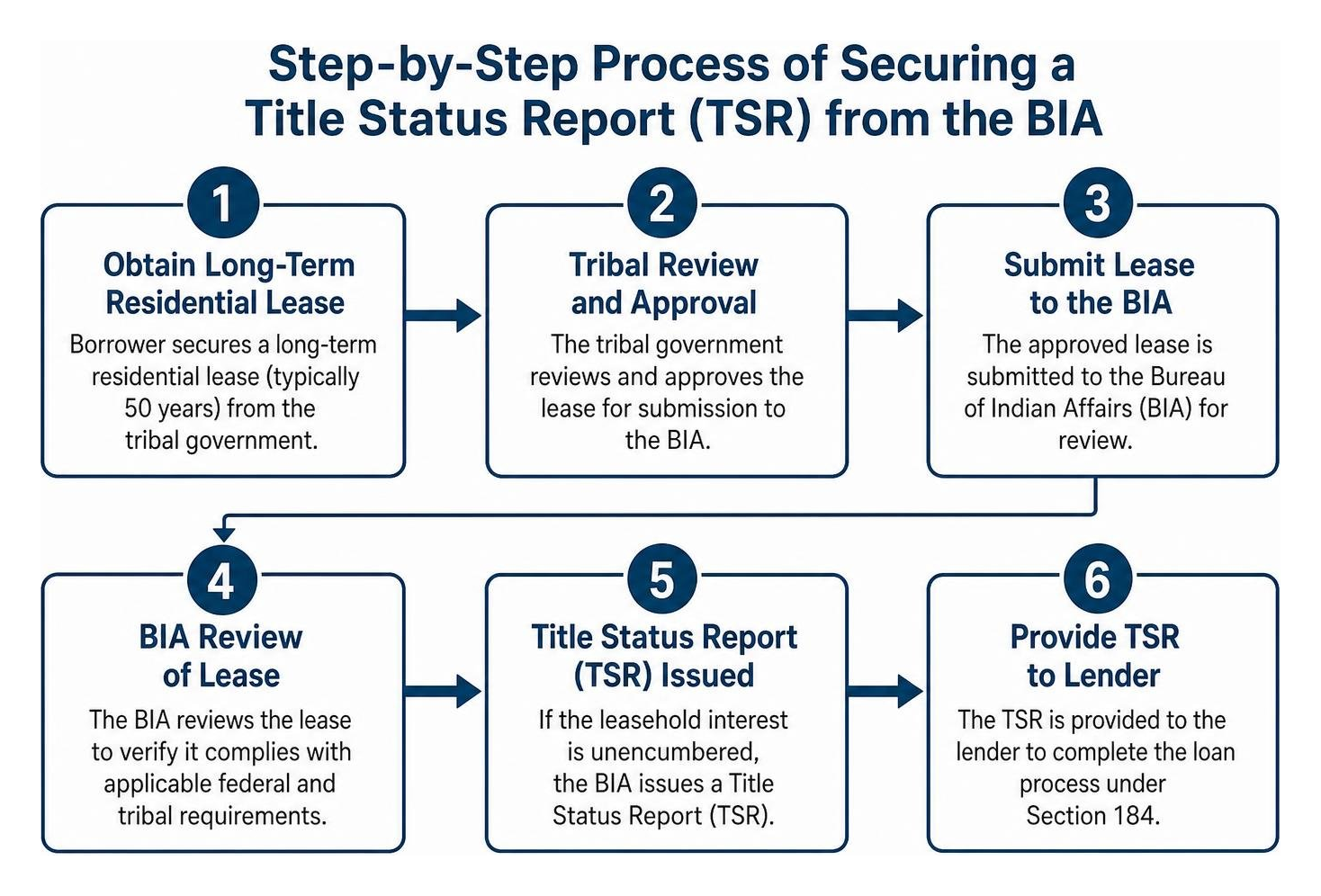
The BIA issues a Title Status Report (TSR), verifying that the leasehold interest is unencumbered. Because the HUD Section 184 program provides a 100% government guarantee to the lender, the legal complexities of trust land do not result in higher interest rate penalties or inflated risk fees for the borrower. Lenders evaluate credit profiles based on documented debt-to-income (DTI) metrics and stable employment histories rather than imposing trust-land risk surcharges.
New Construction and Renovation Protocols on Reservations
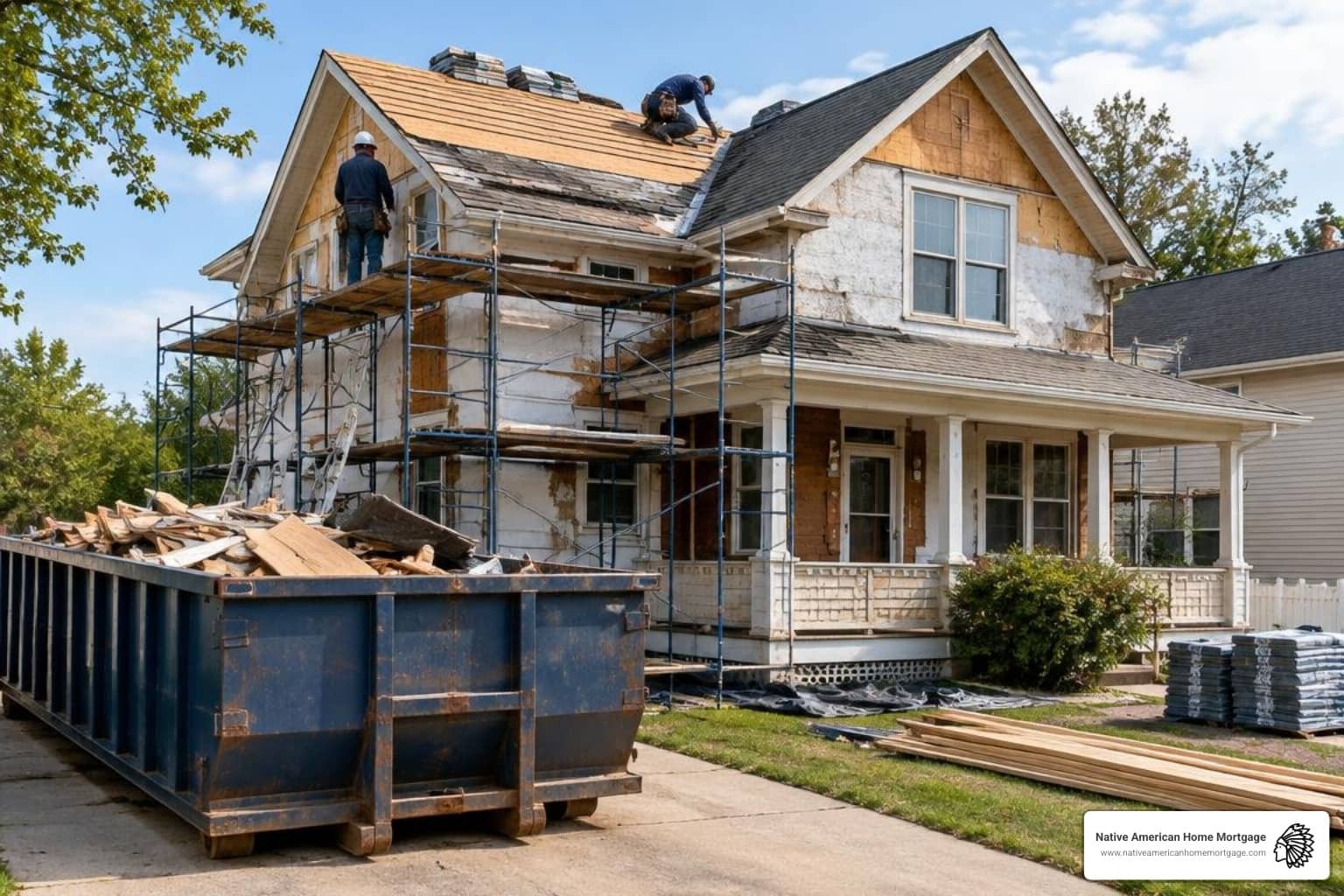
Section 184 supports multiple real estate needs, including site-built construction, major home renovations, and purchasing existing properties.
Building on reservation parcels requires planning for utility access, environmental clearance, and contractor qualifications. For families aiming to build from the ground up, utilizing a specialized construction to permanent loan allows you to finance both the site development and long-term mortgage within a single closing, locking in interest rates and avoiding duplicate settlement fees.
Step-by-Step Application Process with Approved Lenders
Because Section 184 requires specific underwriting protocols, originations must be processed by HUD-approved direct endorsement lenders.
The path from pre-qualification to closing follows this structured timeline:
- Verify Tribal Status: Obtain your official CDIB or tribal membership credentials.
- Prequalification: Connect with an approved direct endorsement lender to assess your income, credit history, and borrowing capacity.
- Select Property and Secure Lease: Choose your home. If building or purchasing on trust land, coordinate with the tribal land office to finalize the residential site lease.
- BIA Coordination (For Trust Land): The lender submits the lease packet to the regional BIA Land Titles and Records Office (LTRO) to generate an initial Title Status Report.
- Underwriting and Direct Endorsement: The lender’s underwriters review the file using manual guidelines, verify debt ratios, and issue conditional loan approval.
- Closing and Final Guarantee: Documents are executed, funds are disbursed, and HUD issues the formal Loan Guarantee Certificate.
Borrowers can review direct federal instructions and downloadable checklists via the HUD Borrowers Section 184 Loan Resources portal.
Market Trends Influencing Native American Home Loan Rates in 2026
Recent updates in federal housing policy continue to strengthen Section 184 execution. The ongoing modernization of BIA land title tracking systems has reduced leasehold review timelines, cutting down rate-lock extension costs for tribal borrowers.
Additionally, increased collaboration between traditional lenders and Native Community Development Financial Institutions (CDFIs) has broadened down payment assistance programs, enabling borrowers to pair regional housing grants with Section 184 guaranteed financing. These structural improvements help ensure Indigenous homebuyers gain access to sustainable, equitable mortgage terms across urban, rural, and reservation communities alike.
Frequently Asked Questions About Tribal Housing Loans
Can Section 184 loans be used to refinance existing high-interest debt?
Yes. Section 184 offers both streamline refinances and cash-out refinance options. If you previously financed a home with a high-interest chattel loan, conventional loan, or older FHA mortgage with monthly insurance premiums, you can refinance into a Section 184 loan to secure a lower rate and remove recurring monthly guarantee charges.
What credit score is required to secure a Section 184 mortgage?
HUD does not enforce a rigid minimum credit score cutoff for the Section 184 program. While many individual lenders establish preferred operational baselines (such as 620), manual underwriting rules allow approvals for borrowers with lower scores or non-traditional credit histories—such as on-time records for rent, utilities, and school tuition—provided compensating strengths exist.
Do all mortgage lenders offer HUD Section 184 financing?
No. Only financial institutions specifically approved by HUD’s Office of Native American Programs (ONAP) can originate Section 184 loans. These lenders maintain trained underwriters and designated tribal liaisons who understand the unique aspects of sovereign tribal laws, BIA leasehold titles, and trust-land conveyances.
Conclusion
Securing an affordable home loan is one of the most effective ways to build intergenerational wealth, establish stability, and protect tribal heritage on ancestral lands. By taking advantage of the Section 184 program’s 2.25% down payment standard, zero annual guarantee fees, and specialized manual underwriting, Native American and Alaska Native families can access mortgage financing built around their needs.
We are dedicated to helping tribal members navigate every phase of the home-buying and refinancing journey. Whether you are building on sovereign trust land or purchasing fee simple real estate in town, visit Native American Home Mortgage to compare your options and start your path toward homeownership today.