How an Owner Builder Construction Loan Helps You Build Your Home
An owner builder construction loan can fund a home you manage yourself instead of hiring a general contractor to run the whole build. To get started, find out whether a lender allows owner-builders, then prepare your plans, an itemized budget, a build schedule, and proof of your land ownership or purchase. Ask how draws will be approved and how the loan will become a permanent mortgage.
Managing the work gives you more control over costs and subcontractors. Doing some work yourself may save money, but it also puts the schedule and budget in your hands. If you plan to build on tribal trust land, ask about land and loan requirements early.
I’m Dale Gremillion, a Senior Loan Officer and Producing Branch Manager with over 25 years in residential mortgage lending, including work supporting Native American homebuyers. I’ll help you understand what to ask when comparing an owner builder construction loan with your plans for the property.
Understanding an Owner Builder Construction Loan
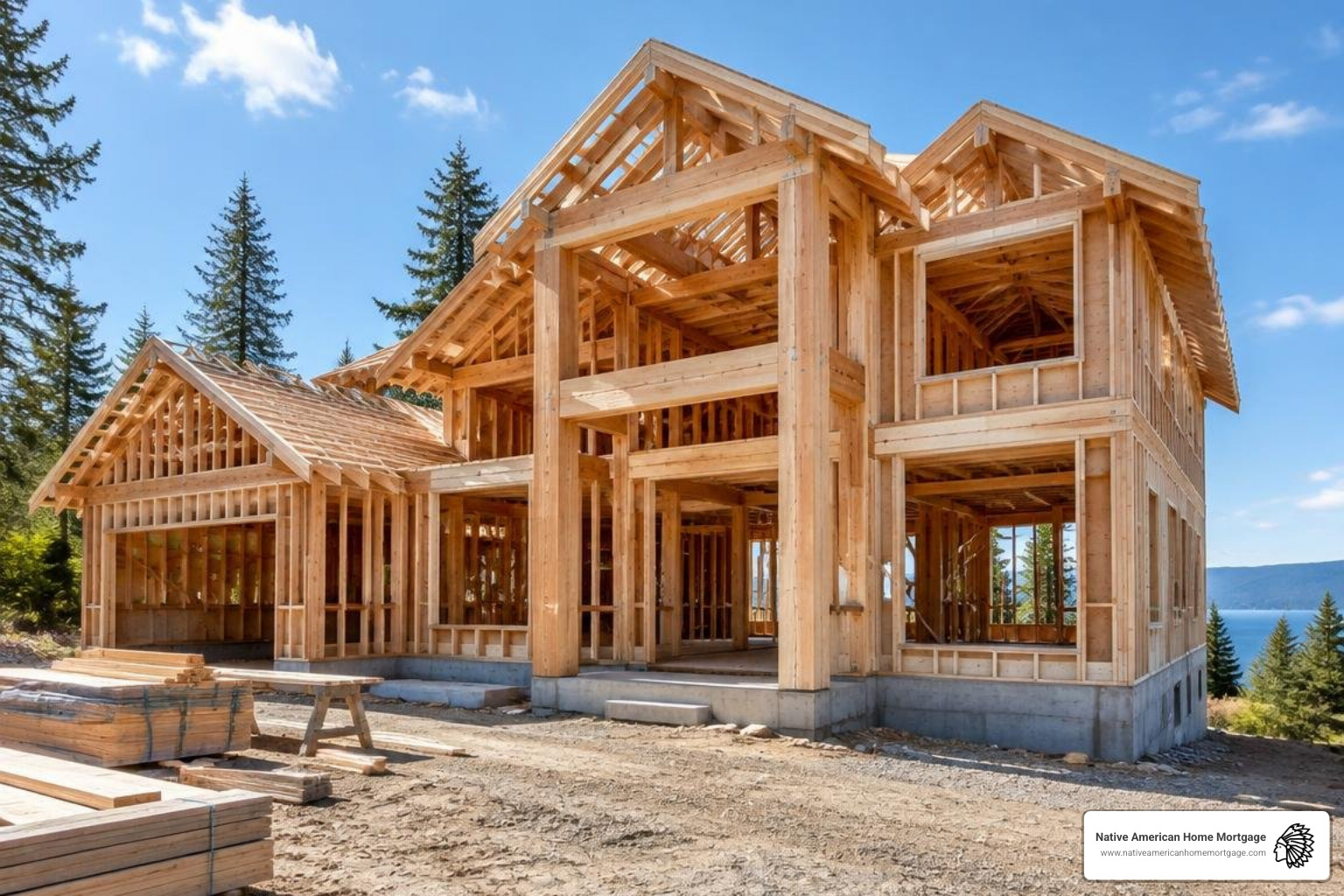
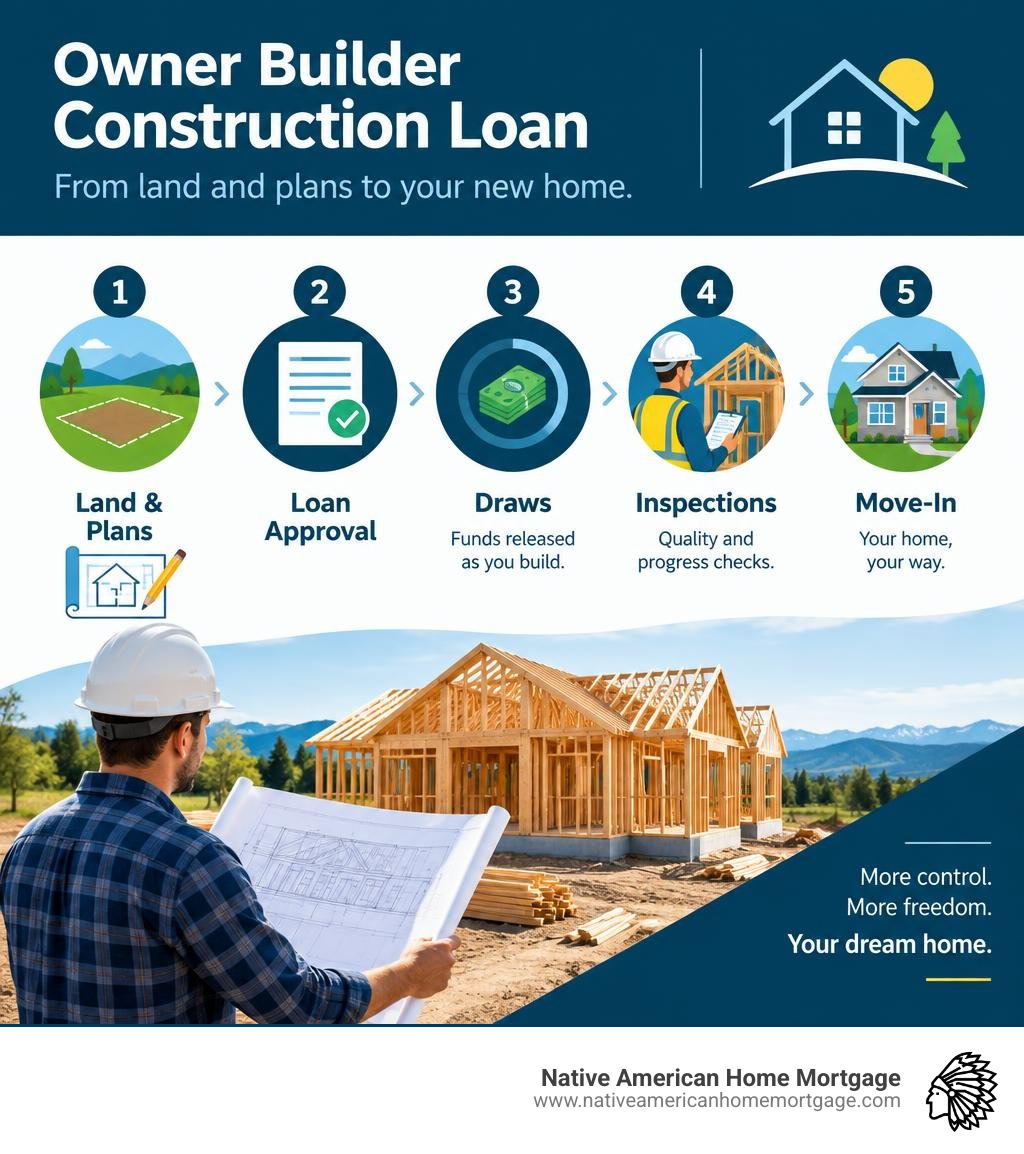
When you decide to construct a home from the ground up, traditional financing does not apply right away. Standard mortgages require an existing, move-in-ready home to serve as collateral. A construction loan solves this problem by providing short-term financing—typically for a 12-month build period—that releases funds in stages as your project reaches defined physical milestones.
During the active building phase, you make interest-only payments on the funds that have actually been drawn, rather than on the full credit line. This keeps your holding costs manageable while the foundation is poured, walls are framed, and the roof goes on.
What makes an owner-builder loan unique is the management structure. Instead of requiring a licensed general contractor (GC) to oversee every detail, the lender allows you, the borrower, to act as the primary project manager. You assume the legal, financial, and operational responsibilities of scheduling crews, sourcing materials, pulling permits, and passing municipal building inspections.
How an Owner Builder Construction Loan Differs from a General Contractor-Managed Build
In a typical turn-key build, a general contractor charges an overhead and profit margin—often ranging from 15% to 25% of total project costs. By taking on the general contracting role yourself, you eliminate this contractor markup, directly translating those savings into immediate equity or a higher-end finish budget.
However, taking the reins changes your day-to-day role entirely. You are directly responsible for:
- Soliciting bids and executing contracts with specialized subcontractors.
- Securing building permits and scheduling local code compliance inspections.
- Sourcing and delivering raw materials to avoid job site downtime.
- Submitting timely draw requests and tracking lien releases from trade vendors.
While the financial upside is substantial, lenders view owner-builders as carrying a higher risk profile. If a professional contractor runs into delays, they have established trade networks to fill the gap. If you hit a roadblock, the financial clock continues to tick on your 12-month construction term. For a deeper look at financing pathways, evaluating options with a construction loan guide can help you weigh self-contracting against turnkey construction models.
Dwelling Eligibility: Single-Family Homes, ADUs, and Barndominiums
Owner-builder loans are not limited to conventional tract-style properties. As long as the build meets local zoning ordinances, international residential building codes, and lender structural guidelines, multiple dwelling types are eligible.
- Custom Single-Family Residences: The most common project, ranging from modest footprint homes to expansive multi-story properties.
- Accessory Dwelling Units (ADUs): Detached or attached secondary dwellings built on property with an existing home, often utilized for multigenerational living or future rental income.
- Barndominiums & Post-Frame Homes: Steel-frame or post-frame buildings that combine residential living quarters with large functional workshop or garage spaces. These require standard permanent foundation footings to qualify for residential financing.
- Rural and Off-Grid Properties: Custom homes situated on acreage requiring specialized site prep, including well drilling, septic installations, and private utility runs.
| Dwelling Type | Primary Structural Requirements | Common Underwriting Considerations | Typical Financing Limits |
|---|---|---|---|
| Single-Family Detached | Poured concrete or block foundation, stick or modular framing | Standard comparable market sales, local building code compliance | Conforming up to $832,750; Jumbo up to $5,000,000+ |
| Accessory Dwelling Unit (ADU) | Permanent utility tie-ins, permanent foundation, approved site plan | Zoning approval for secondary structure, primary home equity access | Up to 80%–85% of total combined property value |
| Barndominium | Engineered foundation footings, residential-grade interior framing | Appraiser experience with non-traditional builds, post-frame guidelines | Up to 80%–85% Loan-to-Cost (LTC) |
| Custom Rural Build | Permitted septic system, verified potable water well, access roads | Extended site development budget, utility connection verification | Up to 70%–80% LTC depending on acreage value |
Qualifying Criteria and Financial Requirements
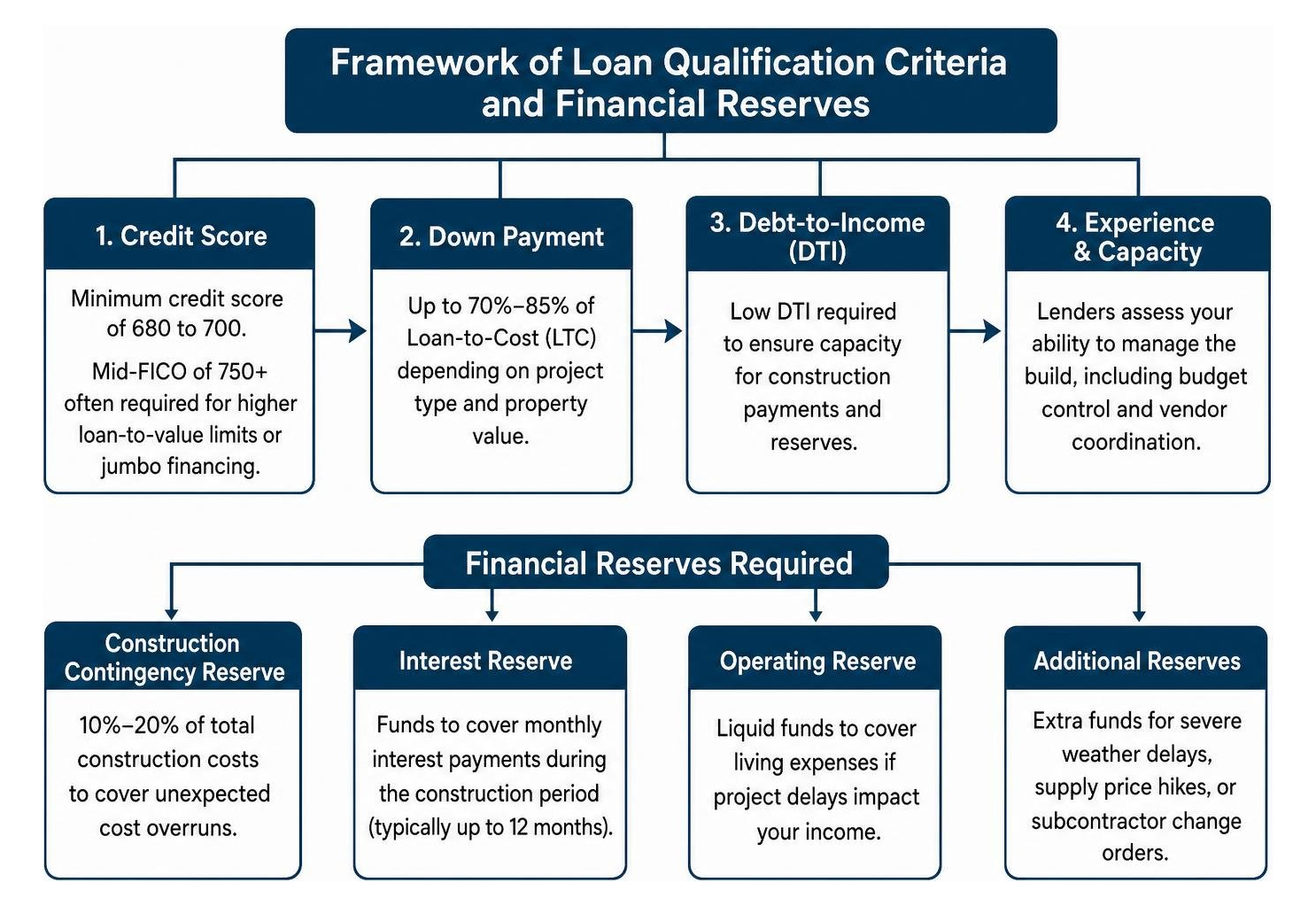
Because you are managing the build, lenders apply stricter underwriting standards compared to standard home purchases. The lender must ensure you have the financial stamina to absorb unexpected supply price hikes, severe weather delays, or subcontractor change orders.
Credit Score, Down Payment, and DTI Benchmarks
To secure an owner-builder loan, your overall credit profile needs to be robust. While standard government-backed purchase mortgages may accept lower credit scores, self-build financing typically requires:
- Credit Score: A minimum credit score of 680 to 700 is common across the industry. For applicants seeking higher loan-to-value limits or jumbo financing, a mid-FICO of 750 or above is often required.
- Debt-to-Income (DTI) Ratio: Most lenders enforce a maximum DTI cap of 38% to 43% of your gross monthly income. This calculation includes your existing debts, your current housing expenses during the build, and the projected monthly payments on your new construction financing.
- Down Payment / Equity: Down payment requirements typically range from 15% up to 30% or even 50% of total project costs, depending on whether you are building a conforming or high-balance luxury property. Industry mortgage credit and construction guidelines provide essential context on how lenders evaluate risk when underwriting these requests.
- Closing Costs: Standard closing costs generally run between 2% and 3% of the total loan amount, covering title work, underwriting, recording, and project feasibility reviews.
Using Land Equity to Cover Upfront Costs
One of the largest financial advantages for self-builders is the ability to leverage land equity in place of cash for the down payment.
If you already own your lot outright, the appraised market value of that parcel can be credited directly toward your equity requirement. For instance, if you own a parcel of land appraised at $100,000 and your total construction budget is $300,000, your land provides an immediate 25% equity stake in the combined $400,000 completed property value.
If you still owe money on a lot loan, lenders can often roll the remaining land payoff directly into the new construction loan. The net positive difference between the lot’s appraised value and the balance owed is credited toward your required down payment. Understanding how lenders appraise future value is a critical part of navigating construction loan approval steps before breaking ground.
Builder Experience and the Owner-Builder Letter
Lenders do not hand over substantial construction financing without assessing your execution capability. You do not necessarily have to be a licensed general contractor, but you must prove your project management competence.
Most lenders require an Owner-Builder Letter or construction resume detailing:
- Relevant Background: Past experience in trade work, project management, engineering, architecture, or prior extensive home renovation projects.
- Detailed Project Scope: Complete architectural plans, engineering reports, and a line-item budget covering every single phase from excavation to final paint.
- Subcontractor Team: A verified list of licensed, insured subcontractors slated to execute technical trades (such as electrical, plumbing, HVAC, and foundation work).
- Time Management Plan: A realistic breakdown explaining how you will balance your everyday career with daily on-site project management duties.
Structuring Your Financing: One-Time Close vs. Two-Time Close
Choosing how your loan is legally structured determines how many closings you will attend, how much you will pay in settlement fees, and how you will protect yourself against interest rate volatility.
Single-Close vs. Two-Step Construction Loans
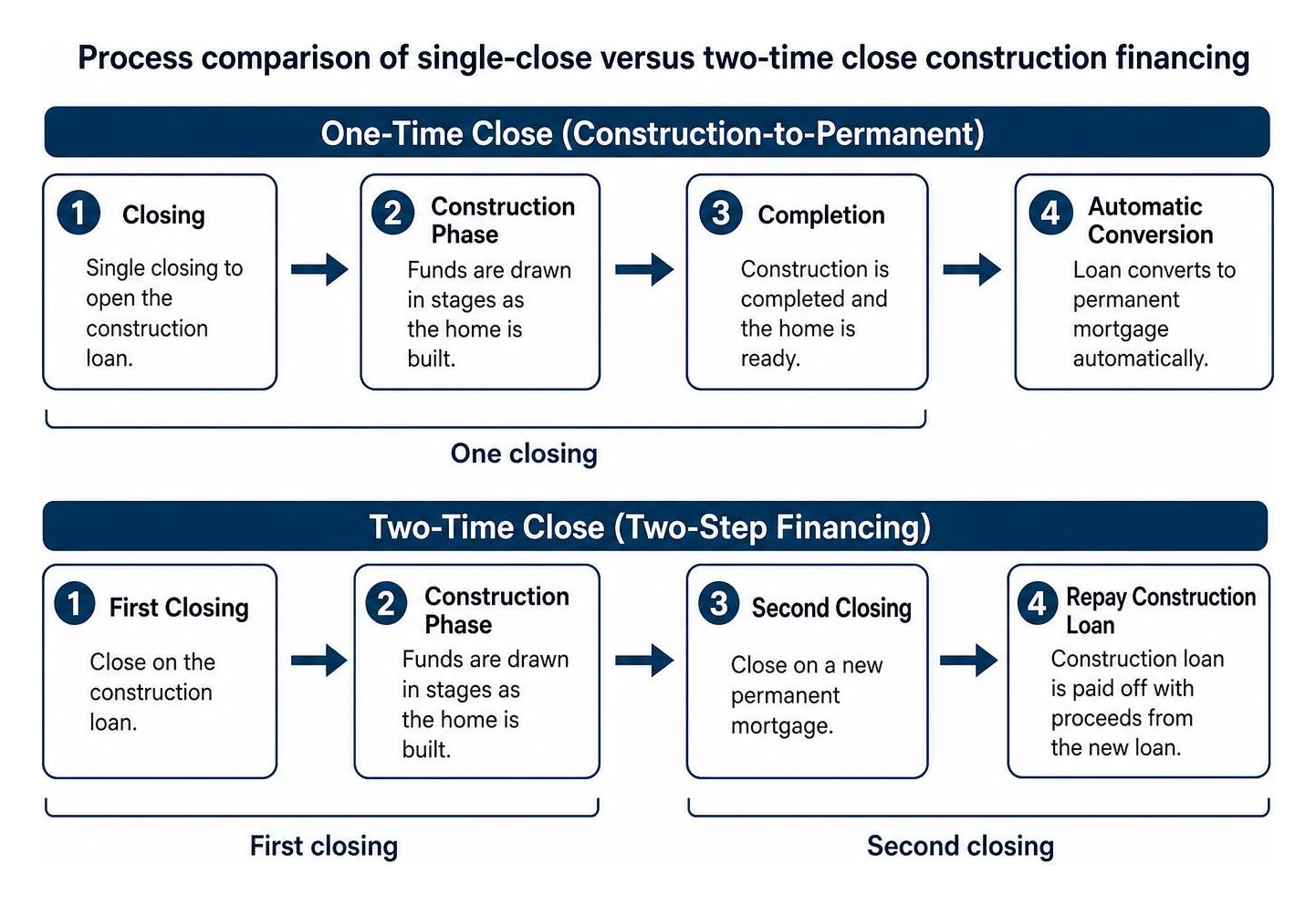
Construction loans are divided into two primary structural frameworks:
| Feature | One-Time Close (Construction-to-Permanent) | Two-Time Close (Two-Step Financing) |
|---|---|---|
| Number of Closings | Single closing before groundbreaking | Two separate closings (Construction loan, then Mortgage) |
| Closing Costs | Single set of settlement charges (typically 2%–3%) | Two full sets of closing fees and title charges |
| Interest Rate Structure | Rate is locked before building; float-down options available | Variable rate during build; market rate locked at completion |
| Qualification Process | Underwritten once for both construction and 30-year term | Underwritten twice; must re-qualify after home is built |
| Flexibility | Rigid project scope; modifications require formal changes | Highly flexible; allows structural loan adjustments before final refi |
| Best Suited For | Borrowers with locked budgets seeking rate certainty | Borrowers selling an existing home during the build |
With a single-close loan, your construction line automatically converts into a long-term, 30-year fixed or adjustable-rate mortgage once the certificate of occupancy is issued. This eliminates the risk that a sudden job change or market shift could disrupt your permanent financing later. Discovering the benefits of single-close construction financing is an effective way to simplify your closing timeline and save thousands in redundant fees.
Specialized Financing and Tribal Land Building Opportunities
Building on sovereign or tribal trust land involves unique legal frameworks because the land cannot be encumbered or foreclosed upon like fee-simple real estate. For Native American homebuyers, specialized programs such as the Section 184 Indian Housing Loan Guarantee Program offer government-backed financing options designed specifically for tribal trust, allotted, and fee-simple lands. State-level programs, such as the Homes for CT Loan Program, also provide regional housing assistance structures.
Securing financing for self-managed construction in these areas requires a lender experienced in sovereign land titles, Bureau of Indian Affairs (BIA) documentation, and specialized residential lease agreements. Reviewing an overview of construction-to-permanent mortgage options will help you align tribal land requirements with standard construction draw milestones.
Managing Draws, Inspections, and Construction Risks

A construction loan does not provide a lump sum of cash on day one. Instead, it operates on a milestone-based draw schedule managed through specialized construction management platforms (such as the Built platform used by over 135,000 builders nationwide).
The Draw Schedule and Inspection Process
Funds are released in progressive installments corresponding to completed stages of the home. A typical draw schedule follows these major construction milestones:
- Draw 1: Site Prep & Foundation: Excavation, footings poured, stem walls set, under-slab plumbing roughed in, and backfill completed.
- Draw 2: Framing & Envelope: Subfloor installed, exterior/interior wall framing erected, roof trusses placed, exterior sheathing, and roof underlayment dried-in.
- Draw 3: Systems Rough-In: Plumbing, mechanical HVAC ductwork, electrical wiring, and insulation installed and approved by municipal inspectors.
- Draw 4: Interior & Exterior Finishes: Drywall hung, taped, and textured; siding/stucco finished; interior trim, cabinetry, and tile laid.
- Draw 5: Fixtures & Final Punch List: Plumbing fixtures, light fixtures, final flooring, appliances, driveway paving, and final grading.
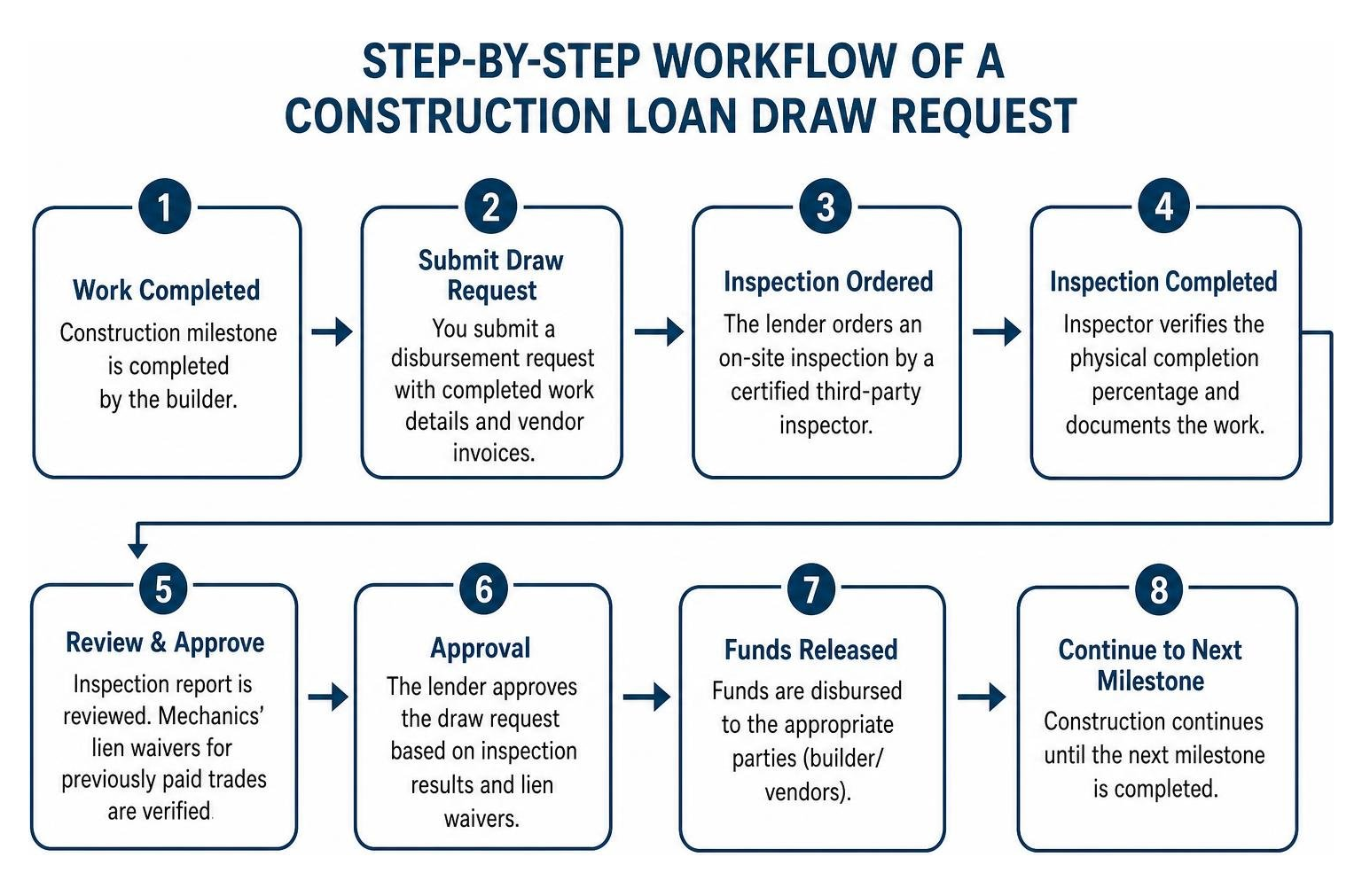
When you are ready for a draw:
- You submit a disbursement request detailing completed work and vendor invoices.
- The lender orders an on-site inspection by a certified third-party inspector to confirm the physical completion percentage.
- Once the inspection report is approved and mechanics’ lien waivers are logged for previously paid trades, funds are released—typically within a 3 to 5 business day turnaround.
Mitigating Cost Overruns and Budget Pitfalls
As an owner-builder, you are the final backstop against budget creep. Lumber pricing fluctuations, ground-condition surprises during excavation, and delivery backorders can quickly erode your capital if you are unprepared.
To manage construction risk effectively:
- Maintain a 10% to 20% Hard Cost Contingency: Lenders will require an unallocated cash reserve or contingency line built directly into your project budget. If foundation digging hits unexpected granite ledge or soil stabilization issues, your contingency absorbs the cost without halting progress.
- Enforce Mandatory Lien Waivers: Never hand a check to a subcontractor or lumber supplier without collecting an unconditional lien waiver for previously completed work, alongside a conditional lien waiver for the current payment. This prevents trade contractors from placing legal claims against your property.
- Verify Subcontractor Insurance: Require proof of general liability insurance and active workers’ compensation coverage from every trade professional stepping onto your site.
- Build Schedule Buffers: Plan for weather disruptions, seasonal permit office slowdowns, and extended lead times on high-demand items like electrical service panels and specialty windows.
Frequently Asked Questions About Owner-Builder Financing
How Does an Owner Builder Construction Loan Convert to a Mortgage?
Once construction is 100% complete, the local municipality issues a formal Certificate of Occupancy (CO). The lender then performs a final site inspection and updates title records to ensure no outstanding mechanics’ liens exist.
If you opted for a single-close loan, the construction phase automatically modifies into the permanent amortization phase. Your interest-only payments end, and you begin paying standard principal and interest based on the terms established at closing. If you used a two-time close loan, you will execute a standard mortgage refinance to pay off the short-term construction note.
Can I Complete Electrical and Plumbing Work Myself as an Owner-Builder?
This depends on your local municipality’s building codes and your lender’s internal policy. Most jurisdictions permit homeowners to complete cosmetic finishes—such as flooring installation, interior painting, cabinet assembly, and trim carpentry—without specialized licensing.
However, mechanical, electrical, and plumbing (MEP) systems, as well as structural foundation engineering, typically require certified, licensed, and insured trade contractors to pull permits and sign off on inspections. Lenders almost universally require licensed trades for MEP systems to protect the long-term structural safety and market value of the property.
How Many Construction Draws Are Allowed During the Build?
The number of draws depends on your loan agreement. While some traditional programs limit borrowers to 4 or 5 rigid draw phases, modern construction financing programs offer flexible, unlimited monthly or bi-weekly draws to match your actual build velocity.
Every draw request requires formal milestone verification through third-party site inspections. Keeping your invoices organized and booking inspections ahead of schedule ensures your trades are paid on time without draining your personal working capital.
Conclusion
Building your own home is one of the most rewarding financial and personal achievements you can undertake. By stepping into the general contractor role, you gain absolute authority over your home’s architectural design, material quality, and budget allocation.
Success requires balancing hands-on site management with meticulous financial planning. Securing the right financing structure, establishing realistic contingency reserves, and mastering the draw process will ensure your journey from breaking ground to move-in day stays on time and on budget.
If you are ready to explore your custom home financing path, review our comprehensive guide to construction to permanent loans to turn your blueprints into reality. Connect with the specialized lending team at Native American Home Mortgage today to map out an owner-builder financing strategy tailored to your land and project goals.