Make Your 1st Tribal Lending Payment Without Missing a Due Date
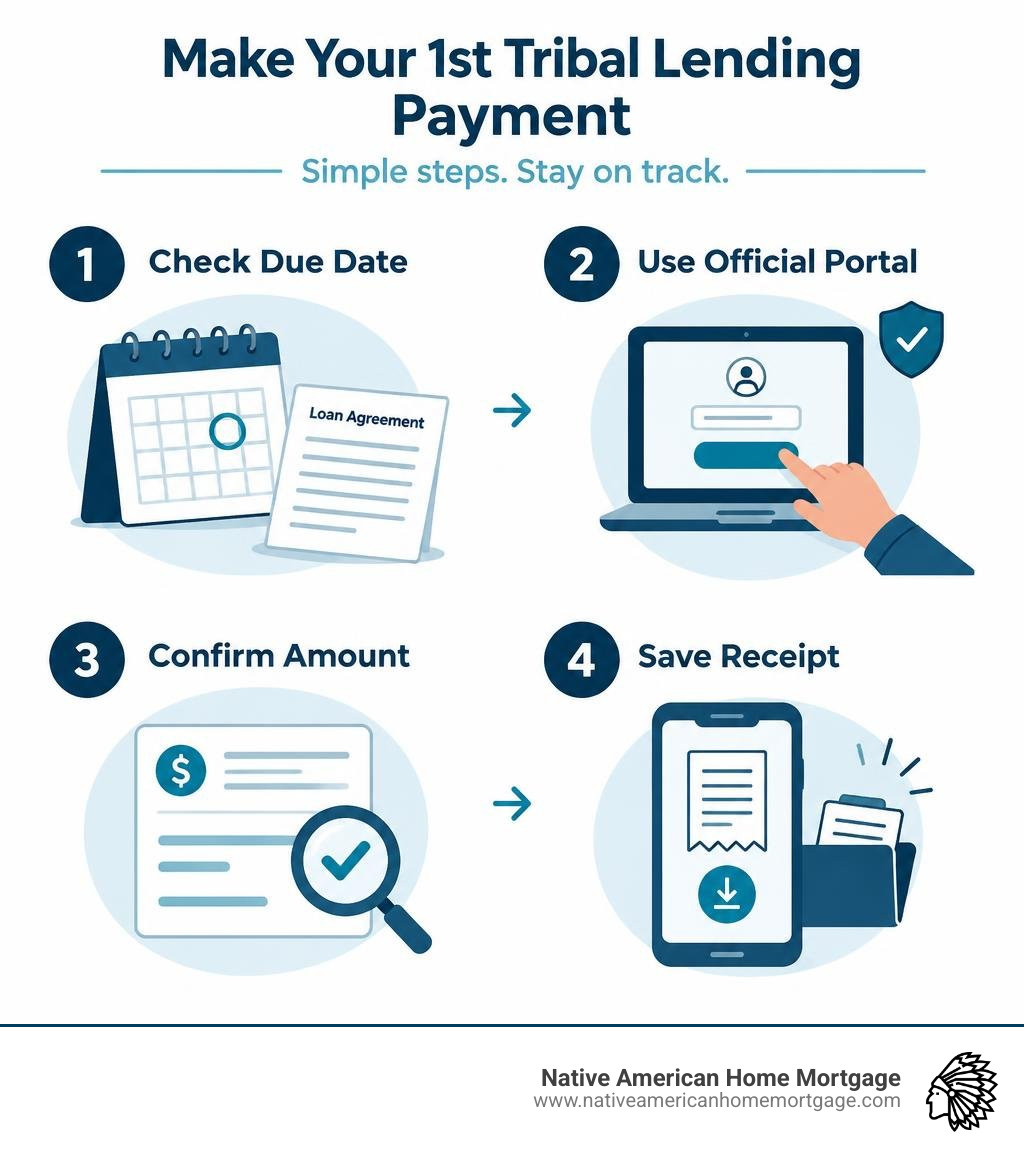
To make a 1st tribal lending payment, first check your loan agreement or account notice for the due date and approved payment channels. Common options may include an online account portal, bank transfer, debit card, or payment by phone. Before you submit payment, confirm the amount due, keep the confirmation number, and make sure your bank account has enough funds to prevent a returned-payment fee.
If you are paying online, use the lender’s official website only. Log in, review the payment details, select a one-time payment or recurring payment option if available, and save the receipt. Paying early can reduce the risk of missed-payment problems, but review your agreement to understand how extra payments are applied.
This guide also separates short-term, high-cost tribal loans from legitimate Native American home-financing programs, such as HUD’s Section 184 Indian Home Loan Guarantee Program. A Section 184 loan is a federally guaranteed mortgage program with long-term, fixed-rate financing – not an emergency cash loan with potentially high APRs.
I am Dale Gremillion, a Senior Loan Officer and Producing Branch Manager with more than 25 years of residential mortgage lending experience, including HUD 184 and Native American home-financing programs. I help borrowers understand the payment terms behind a 1st tribal lending payment and make informed choices that support long-term housing stability.
How to Complete Your First Tribal Lending Payment Online and by Phone
Managing your loan balance shouldn’t feel like navigating a maze. Whether you are servicing a residential mortgage or handling an installment account, modern lending platforms give you multiple ways to stay current. Completing a transaction on time protects your credit standing and helps you avoid unnecessary late fees.

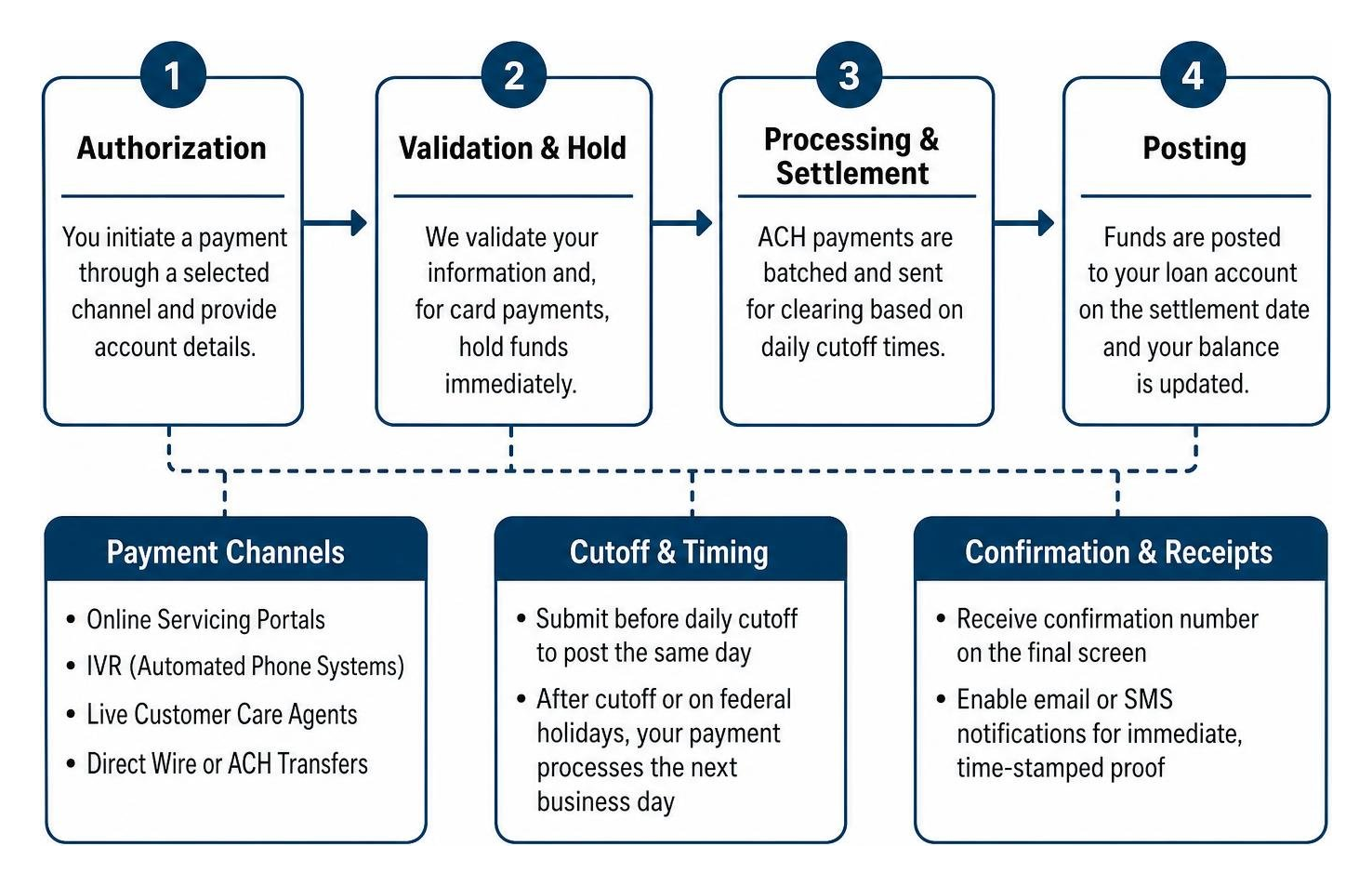
When you make a payment, you can select from several electronic channels designed for convenience:
- Online Servicing Portals: You can log in securely via desktop or mobile browser to initiate ACH payments directly from a checking or savings account.
- Automated Phone Systems (IVR): Most loan servicers operate 24/7 interactive voice response systems that let you enter your account details and routing numbers over the phone.
- Live Customer Care Agents: If you prefer speaking to an expert, phone representatives can process one-time electronic debits or assist with card-based options.
- Direct Wire or ACH Transfers: Your personal banking institution can initiate direct transfers using the servicer’s specific routing and transit numbers.
That ACH transfers operate on standard banking batch windows. To guarantee that your payment posts on the exact day you authorize it, submit your request before your servicer’s daily cutoff time. Missing that window means your transaction rolls into the next business day’s processing cycle, which can cause headaches over holiday weekends.
Setting Up an Automated Tribal Lending Payment
The easiest way to make sure you never miss a deadline is to set up automatic recurring debits (autopay). When you schedule autopay through your servicer’s secure dashboard, you eliminate the stress of manual submissions and prevent accidental late marks.
During enrollment, you simply link your checking account by providing your bank’s routing number and your unique account number. You can designate your payment date—typically the 1st of the month, with most standard residential agreements offering a grace period through the 15th.
Once autopay is active, establish a regular habit of checking your checking balance 24 to 48 hours prior to the scheduled draw. Setting up mobile banking alerts ensures you have sufficient funds to cover the withdrawal, protecting you from non-sufficient funds (NSF) charges. For those evaluating broader residential mortgage structures, reviewing a practical guide to home financing options provides excellent clarity on how fixed recurring payments operate over a standard 30-year amortization schedule.
One-Time Repayment Channels and Debit Card Processing
If your cash flow varies or you prefer manual oversight of your household budget, one-time payment methods give you complete control over transaction timing.
- Online Portal Submissions: Log into your verified borrower profile, navigate to the billing section, enter the amount you wish to pay, and select standard ACH or debit card processing.
- Debit Card Processing: Many borrowers prefer debit cards because the funds are held immediately by their bank, eliminating the 1- to 2-day settlement lag common with standard ACH transfers.
- Payment Processing Cutoffs: Standard ACH batches typically settle by 5:00 PM ET if initiated before standard afternoon banking deadlines (often 2:00 PM ET). Submissions made after these cutoffs or on federal banking holidays process on the subsequent business day.
- Confirmations and Receipts: Always wait for the final screen to display your payment confirmation number. We strongly recommend enabling email or SMS push notifications so you receive immediate, time-stamped proof of your transaction for your financial records.
Understanding Native American Mortgage Payments
A critical distinction every borrower must understand is the difference between an official, government-backed Native American home loan and high-interest short-term personal loans marketed under tribal sovereignty.
The Section 184 Indian Home Loan Guarantee Program was established by Congress in 1992 specifically to address the historic lack of mortgage capital in Indian Country. Because of geographic barriers—where the average trip to a bank branch or ATM for tribes in the lower 48 states is about 12.2 miles, and some rural tribal communities live more than 70 miles away—traditional financing has historically been difficult to access. Furthermore, roughly 16% of Native Americans do not have a traditional bank account, underscoring the vital need for accessible, fair, and structured financial tools.
Section 184 mortgages feature fixed interest rates, low down payments (as low as 2.25%), no private mortgage insurance (PMI), and standard 15- or 30-year terms. Borrowers considering short-term personal installment loans should be aware that some online products marketed under tribal sovereignty have drawn regulatory scrutiny and may expose borrowers to elevated costs and limited oversight.
| Feature | HUD Section 184 Home Mortgage | High-Interest Short-Term Tribal Loan |
|---|---|---|
| Primary Purpose | Long-term home purchase, construction, or refinance | Short-term emergency personal cash |
| Typical APR / Rates | Standard market fixed rates (typically 5% – 7%) | Extremely high (often 400% – 770%+) |
| Loan Terms | 15 to 30 years | 6 to 24 months |
| Down Payment | 1.25% to 2.25% required | Not applicable |
| Regulatory Framework | Federal HUD guidelines, CFPB, RESPA, TILA | Sovereign tribal law, often bypassing state caps |
| Consumer Protection | Full federal statutory protections, forbearance rules | Limited state oversight, sovereign immunity defenses |
Managing Mortgage Payment Protections
When you carry a residential mortgage backed by federal guarantees, your monthly installment covers four main components: principal, interest, taxes, and insurance (PITI). Because these loans are structured under strict federal oversight, your payment schedule is fixed, transparent, and designed for sustainable homeownership.
Federal courts have scrutinized consumer lending operations that attempt to use tribal sovereign immunity to shield themselves from interest rate limits, as detailed in federal court findings on lending models. Genuine home mortgage programs operate under strict federal compliance, ensuring borrowers receive clear Truth in Lending disclosures and fair underwriting.
State Legal Protections for Mortgage Borrowers
Consumer protection laws vary by state, establishing clear usury caps and strict licensing standards to shield residents from predatory financial practices:
- Virginia: Limits annual interest rates on unauthorized consumer loans to 12%.
- Georgia: Imposes an 8% statutory interest cap on personal loans under $3,000.
- Maryland: Enforces consumer lending rate caps generally ranging between 24% and 33%.
- Florida: Maintains statutory usury protections dating back to 1822 that cap interest on consumer loans at 18%.
When non-tribal entities construct “rent-a-tribe” arrangements—paying nominal fees (sometimes less than 2% of revenue) to a tribe while operating consumer loan businesses thousands of miles away—courts have repeatedly stepped in. Legal actions under the Racketeer Influenced and Corrupt Organizations (RICO) Act have targeted these deceptive structures, ruling that sovereign immunity cannot be used by third-party companies to evade state usury and licensing mandates.
Managing Loan Payoffs, Extensions, and Missed Payments
Keeping your account in good standing requires proactive communication with your loan servicer. Whether you want to pay down your balance ahead of schedule or face an unexpected financial disruption, understanding your options ensures you make the right moves.

What Happens If You Miss a Tribal Lending Payment?
If you anticipate difficulties making your monthly payment, never wait until the due date has passed. In a standard mortgage framework, loan servicers offer structured grace periods (typically lasting through the 15th of the month) before assessing a late charge.
If an account goes 30 days past due, servicers are required to report the delinquency to major national credit bureaus, which can significantly damage your credit profile. Continued non-payment leads to formal default notices, acceleration of the underlying debt, and eventually legal foreclosure proceedings.
Borrowers who maintain an open line of communication with their servicer can often access formal relief, including temporary forbearance, repayment plans, or loan modifications. If you are exploring financing solutions tailored to tribal members, learning more about exploring home financing options with tribal lending can help you select stable, sustainable programs designed to support your family’s financial security.
Penalty-Free Early Payoff Strategies
One of the greatest advantages of HUD Section 184 mortgages and reputable home financing options is the complete absence of prepayment penalties. You have the right to accelerate your payoff timeline whenever you choose, directly reducing the total interest paid over the life of your loan.
- Bi-Weekly Payments: Making half of your monthly payment every two weeks results in 26 half-payments (or 13 full monthly payments) each year, knocking years off a 30-year amortization schedule.
- Dedicated Principal Curtailments: Adding an extra $50, $100, or $200 directly toward your principal balance each month immediately lowers your remaining balance. Always verify on your payment portal that the extra funds are marked as “Principal Only.”
- Lump-Sum Reductions: Applying tax refunds, work bonuses, or seasonal earnings directly toward your loan balance creates massive long-term interest savings.
Understanding these repayment mechanics is central to managing your overall financial health and strengthening your mortgage readiness over time.
Frequently Asked Questions About Tribal Lending Payments
Can you pay off a tribal mortgage early without penalty?
Yes. Federally backed home loans, including the HUD Section 184 Indian Home Loan Guarantee Program, prohibit prepayment penalties. Borrowers can make extra principal payments or settle their entire balance in full at any time without paying supplemental fees. Always confirm with your loan servicer that extra funds are applied directly to principal reduction rather than future interest.
What payment methods are accepted for monthly installments?
Most residential loan servicers provide a wide variety of payment channels:
- Secure online borrower dashboards for one-time ACH transfers
- Automated recurring monthly debits (autopay)
- Visa or Mastercard debit card processing
- Automated phone payment systems (IVR) and live representative assistance
- Direct bank bill-pay and institutional wire transfers
Can a mortgage lender sue or garnish wages for delinquent payments?
A residential mortgage is secured by real property. If a borrower defaults, the primary legal remedy for the lender is standard judicial or non-judicial foreclosure on the underlying real estate according to state or tribal jurisdiction. While unsecured personal lenders may attempt to file civil lawsuits to obtain monetary judgments for wage garnishment, home mortgage servicers focus on loan restructuring, loss mitigation, or property recovery.
Conclusion
Managing your monthly home loan obligations should be a clear, predictable, and empowering experience. By understanding the critical distinction between short-term high-cost personal credit and secure, government-backed programs like HUD Section 184, you can protect your household from predatory interest rates and build genuine generational wealth.
Whether you are setting up automatic monthly debits, paying online, or making strategic principal curtailments to pay off your home early, staying informed keeps you in control. For dependable guidance on homeownership and secure financing solutions built specifically for Native communities, connect with our team for trusted Native American home mortgage solutions and take the next step on your homeownership journey with confidence.